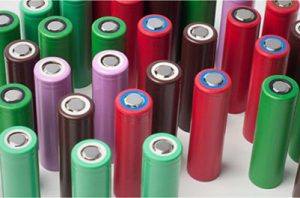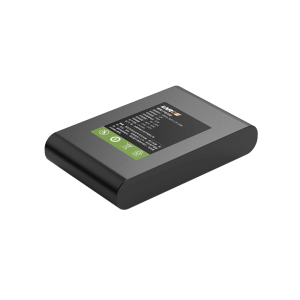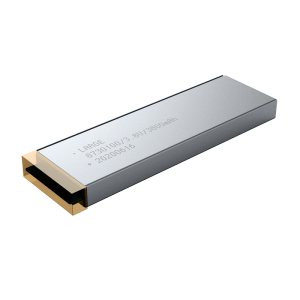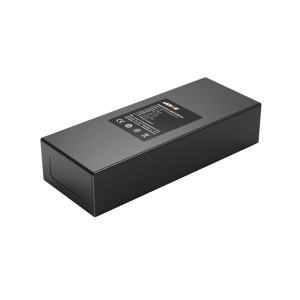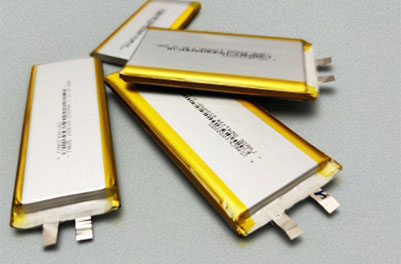
LiPo Battery is a kind of lithium ion battery, but compared with liquid lithium ion battery,it has many obvious advantages, such as high energy density,small size, ultra-thin, lightweight and high safety. It is a new type of battery.
LiPo Battery Cell Model
| Model | Dimension | Nominal Capacity(mAh) | Impedance(mΩ) | Nominal Voltage(V) | ||
| Thickness(±0.3mm) | Width(±0.3mm) | Height(±0.5mm) | ||||
| 3578131 | 3.5 | 78 | 131 | 4000 | <40 | 3.7 |
| 3463110 | 3.4 | 63 | 110 | 2700 | <40 | 3.7 |
| 3845120 | 3.8 | 45 | 120 | 2200 | <40 | 3.7 |
| 366090 | 3.6 | 60 | 90 | 2000 | <40 | 3.7 |
| 3435165 | 3.4 | 35 | 165 | 1800 | <40 | 3.7 |
| 2453135 | 2.4 | 53 | 132 | 1400 | <40 | 3.7 |
| 385085 | 3.8 | 50 | 85 | 1300 | <60 | 3.7 |
| 344461 | 3.4 | 44 | 61 | 1200 | <60 | 3.7 |
| 255480 | 2.5 | 52 | 80 | 1150 | <50 | 3.7 |
| 393278 | 3.9 | 32 | 78 | 1100 | <65 | 3.7 |
| 305060 | 3 | 50 | 60 | 900 | <40 | 3.7 |
| 383450 | 3.8 | 34 | 50 | 600 | <70 | 3.7 |
| 383450 | 3.8 | 34 | 50 | 450 | <80 | 3.7 |
| 233759 | 2.4 | 37 | 59 | 380 | <80 | 3.7 |
| 392339 | 3.9 | 23 | 39 | 330 | <80 | 3.7 |
| 302441 | 2.8 | 24 | 40.5 | 250 | <100 | 3.7 |
| 251776 | 2.5 | 17 | 76 | 230 | <120 | 3.7 |
| 302145 | 3 | 21 | 45 | 210 | <150 | 3.7 |
| 222530 | 2.5 | 25 | 30 | 120 | <180 | 3.7 |
| 321239 | 3.1 | 12 | 39 | 100 | <200 | 3.7 |
LiPo Battery Classification
1.Structure
- Winding
Use the same winding process as the production of liquid lithium ion battery, wind up the positive electrode, negative electrode and electrolyte film, and package it with aluminum foil.
- Lamination
Cut the anode and cathode into a certain size, make them with electrolyte film by hot-pressing technology, and then package with aluminum foil.
2.Electrolyte
- Gel polymer electrolyte lithium ion battery adds additives in solid polymer electrolyte to improve ionic conductivity, so that the battery can be used at room temperature.
- The electrolyte of solid polymer electrolyte lithium ion battery is a mixture of polymer and salt. It has low ionic conductivity at room temperature, which is suitable for high temperature usage.
- The lithium ion battery that has composite gel polymer anode material uses conductive polymer as the anode material. Its specific energy is 3 times of the existing lithium ion battery, so it is the latest generation of lithium ion battery.
Advantages of LiPo Battery
Due to the polymer materials,
the cell will not catch fire or explode.
With the capacity of 6V400mAh,
its thickness can be as thin as 0.5mm.
40% lighter than the steel case
lithium ion battery with the same
capacity specification, and 20%
lighter than the aluminum case battery.
Polymer battery contains no liquid electrolyte
and uses colloidal solid.
Due to the polymer materials,
the cell will not catch fire or explode.
With the capacity of 6V400mAh,
its thickness can be as thin as 0.5mm.
40% lighter than the steel case
lithium ion battery with the same
capacity specification, and 20%
lighter than the aluminum case battery.
LiPo Battery Parameters
1.Voltage
- Nominal voltage:3.7V
- Charging voltage:4.1V~5V
- Discharging voltage:2.8~4.2V
- Storage voltage:3.7~3.8V
2.Capacity
The capacity of a lithium polymer battery depends on the thickness, width and length. It also depends on the material and size.
Fast estimation of polymer battery capacity, commonly used estimation formula (estimation only):
Capacity = Thickness * Width * Length *K (The unit of K is mah/mm^3)
3.Internal Impedance
Internal impedance refers to the impedance encountered by the current flowing through the lithium ion battery when the lithium ion battery is working. It is mainly composed of electrode materials, electrolyte, separator impedance and the contact impedance of each part, which are affected by the size, structure and assembly of the battery.
4.Charge Rate
Charge Rate = Charge Current/Rated Capacity
The maximum charging rate is the safest, but it is not the best charging rate. A lower charging rate can better extend the service life of the battery.
5.Discharge Rate
Discharge Rate=Discharge Current/Rated Capacity
Discharge rate maintains safe discharge speed of the battery. In the specified time, the battery releases its rated capacity current, which is equal to the battery rated capacity multiple. Discharge rate is expressed by letter C.
Comparison of LiPo Battery and Lithium Ion Battery
| Lithium Polymer Battery | Lithium Ion Battery | |
| Raw Material | The anode, cathode or electrolyte uses polymer materials. | Activated carbon, graphite, and organic electrolytes |
| Shape | Electrolytes are solid and colloidal and can vary in shape. | Liquid electrolyte; Case packaging; The shape is not easy to change. |
| Safety | The polymer has high safety and is not easy to explode and burn. | Lithium polymer battery is safer than lithium ion battery. |
| Raw Material | High voltage can be achieved by using polymer material multilayer combination to achieve high voltage. | The nominal capacity of the lithium ion battery cell is 3.6V. For high voltage, lithium ion battery cells need to be connected in series |
| Capacity | The capacity of lithium polymer battery cell does not improve effectively. | Lithium ion battery has a slightly higher capacity than that of lithium polymer battery. |
| Electrical Conductivity | Lithium polymer battery has low ionic conductivity of solid electrolyte. | Lithium ion battery has stable electrical conductivity and is not affected by other materials. |
| Manufacture Technology | The thinner the lithium polymer battery, the better it can be manufactured. | The thicker the lithium ion battery, the better it can be manufactured. |
| Price | Lithium polymer battery is generally more expensive than lithium ion battery. | Lower price than that of lithium polymer battery |
LiPo Battery Maintenance
The lithium polymer battery has a certain life. It doesn’t mean that you can prolong battery life without using. Battery maintenance only has corresponding standards during using.
1.Charging Standard
- The charger of lithium polymer battery must be able to charge at constant current and constant voltage.
- The single battery cell must be charged under 1C 5A.
- The charging temperature ranges from 0 to 45℃.
- Charging voltage shall not exceed 4.23V.
2.Discharging Standard
- Batteries are generally flammable and explosive, and should be placed in somewhere ventilated without high temperature.
- The long-term storage environment of the battery is -20℃~35℃, and the relative humidity is 45%~75%.
- After storing for nearly one year, recharge the battery to 10%~50% by standard charging methods.
3.Storage Standard
- The discharge current is less than 2C 5A.
- The final discharging voltage of a single battery cell shall not be less than 2.75V.
- The discharge temperature ranges from -20℃ to 60℃.
LiPo Battery Pack
The process of assembling lithium polymer battery cells is called PACK, which connects single battery or multiple cells into lithium ion battery modules in series and parallel.
Lithium polymer battery pack consists of battery pack, bus bar, flexible connection, PCM, exterior package, output (including connector), highland barley paper, plastic holder and other auxiliary materials.
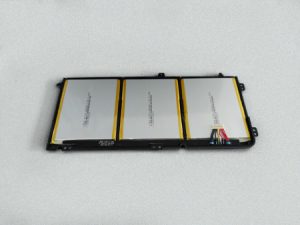
Lithium Polymer Battery Connecting in Series(3S1P)
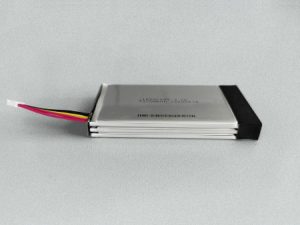
Lithium Polymer Battery Connecting in Parallel(1S3P)
Best LiPo Battery Pack
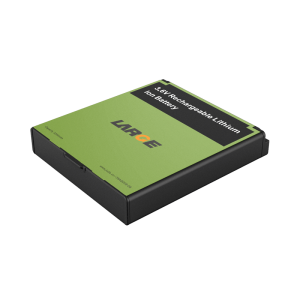
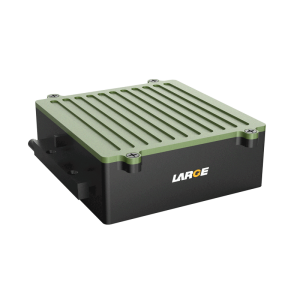 -40℃ Low Temperature Li-Polymer Battery
Special Backup Instrument
Nominal voltage:14.8V
Nominal capacity:1700mAh
Battery dimension:63*64.5*23.5(±0.2,mm)
LiPo Battery Connector
Connector is commonly known as plug-in unit, plug and sockets, etc. It is used to connect power supply and signal device. There are wire to wire connector and wire to board connector.
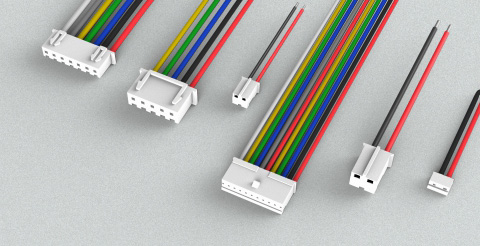
Common Battery Plug
- Molex 2510、Molex 51021、Molex 78172
- JST SHR、JST ACHR、JST PHR、JST XHP、JST SYR、JST SYP、JST ZHR SM2.5, XT plug, EC5 plug, DuPont plug, TP2.0, YH2.5mm, Tamiya, etc.
- Common Model Airplane Plug:EC3、EC5、EC8、XT30、XT60、XT90
Common Model Airplane Plug
- EC3,EC5,EC8,XT30,XT60,XT90
Swollen LiPo Battery
1.LiPo Battery Swollen Reasons
- Poor packaging: During the production process, air moisture enters into the cell, causing electrolyte decomposition and gas production.
- Excessive water content in the cell: In the manufacturing process, once the water content exceeds the standard, the electrolyte will decompose and produce gas.
- Corrosion: Corrosion occurs to the polymer pouch cell, and the aluminum layer is consumed by the reaction. As a result, water barrier is lost and battery swells.
- Surface damage: Damaged by external forces, water gets into the cell after puncture. When exposes to air, lithium metal reacts intensely with oxygen.
- Crash: Aluminum is easy to deform. The bigger size the cell, the bigger size the bump, the more easily the cell is damaged.
- Short circuit: The anode and cathode contact leads to short circuit, and then the lithium polymer battery cell may produce gas and even smoke.
- Internal short circuit: Shrinkage, crimping, breakage and piercing of lithium polymer battery separator will cause internal short circuit and swollen battery.
- Overcharge or over discharge: When overcharged or over discharged the polymer pouch cell, the PCM is abnormal, and the battery cell will be seriously swollen.
2.Repair and Application of Swollen Battery
- If your phone battery is already swollen, use your finger to find the gap in the battery and poke a small hole in it to let the air out.
- You can replace it with a new lithium polymer battery pack. Avoid overcharging during charging, which can not only protect the battery from damaging, but also lead to energy conservation and environmental protection.
LiPo Battery Disposal
1.Use waste LiPo Batteries Properly to Avoid Environmental Pollution.
Lithium polymer batteries are considered to be a relatively environmentally friendly way of storing energy. However, if the discarded lithium polymer batteries are not recycled properly, they may cause environmental pollution.
2.Main Hazardous Substances of Waste LiPo Battery
| Category | Conventional Materials | Potential Environmental Pollution |
| Anode Material | LiCoO2/LiMn2O4/LiNiO2 | Heavy metal pollution; Co, Ni, Mn are strong carcinogens, toxic substances, and may change the environmental pH. |
| Electrolyte | LiPF6LiBF4/LiAsF6 | Change the environmental pH; Fluorine pollution |
| Volume (mAh/g) | 135~140 | 140~180 |
| Electrolyte Solvent | EC/PC/DC | It is difficult to degrade; Toxic; Burning will produce greenhouse gases. |
| Separator | PP/PE | Difficult to degrade |
| Adhesive | PVD/VDF/EPD | Fluorine pollution; Difficult to degrade |
3.The Disposal Status of Waste LiPo Batteries in the World
- Germany and America has legislation, and begin to do all the collection and classification.
- Japan implements the “3R Plan”, which changes “mass production, mass consumption and mass waste” into “recycling, reduction and reuse”.
- In 2003, China issued the Policy on Waste Battery Pollution Prevention and Control Technology, requiring battery producers to take important responsibility for the disposal of waste batteries.
4.How to Dispose Waste LiPo Battery
- If there is a waste battery recycling agency nearby, please send the waste battery to them.
- If there is no waste battery recycling agency nearby and the battery quantity is relatively large, you can contact the local environmental protection bureau or mail to the recycling agency in other cities.
- Correctly classify and discard the polymer into toxic and hazardous waste bins.
- Before throwing away lithium polymer batteries, soak them in salt water for 1-2 days to ensure that they have fully discharged.
Notes for Purchasing LiPo Batteries
1.Brand
When choosing lithium polymer batteries, we should search for well-known brands, so that the quality of batteries can be guaranteed. Although the price of many small brands in the market is cheap, the battery may have short life and poor quality.
2.Capacity
Check if the capacity is clearly marked. A battery pack without a clearly marked capacity (such as 1000mAh or 1000 MAH) may be a poor quality battery pack or a recovered battery pack without quality assurance.
3.PCM
Without a PCM, the lithium polymer battery has the risk of deformation and leakage. In the competitive market, companies have sought cheaper PCM, or omitted them, leaving lithium polymer batteries explosive risk on the market.