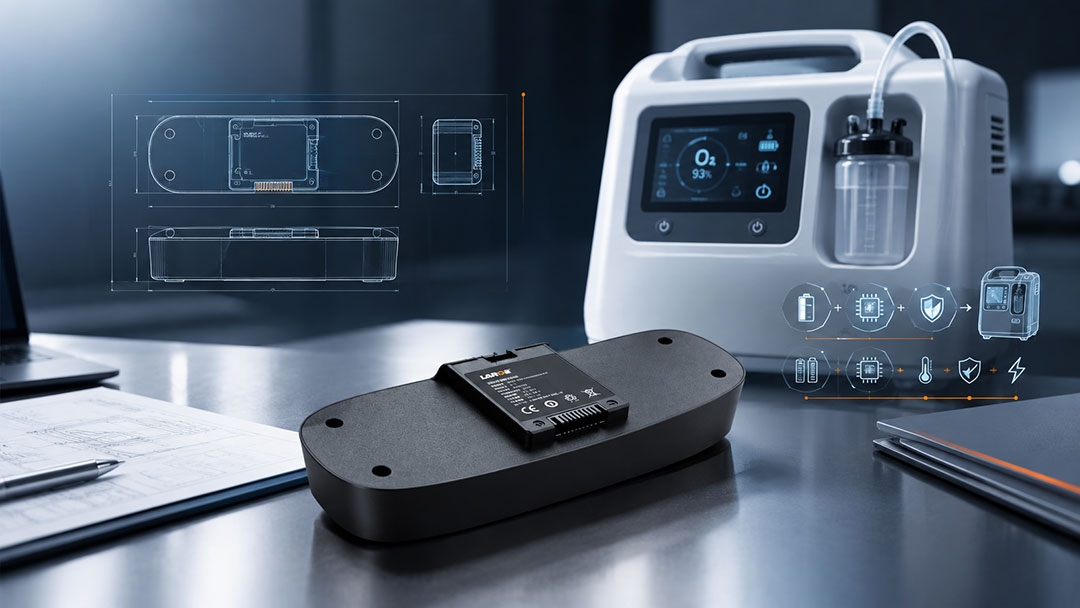
Medical battery design requires careful chemistry selection, protection circuits, and compliance with IEC 62133 and IEC 60601-1 to ensure safety and reliability.

It is no wonder that lithium-ion batteries, which are a rechargeable type of batteries, are vital to today’s technology, powering most of the portable devices as well as electric vehicles.
Batteries are used for several applications, from small toys to automobiles. We buy batteries depending on the device or application they are to be used.
The British Chemist M. Stanley Whittingham first proposed using Lithium to make batteries in the year 1970. Whittingham used electrodes made from Titanium Sulfide and Lithium.
Your expensive electronic gadgets like laptops or smartphones or tabs will be a bunch of dead gadgets without a battery. Your batteries are the rechargeable powerhouse that has a finite lifespan.
Lithium Polymer batteries are known as LiPo batteries. LiPo batteries are now used in various kinds of electronic devices. This type of battery has gained a respectful reputation in industries radio control and others.
This article throws light on punctured lithium-ion battery disposals, its reactions and risks involved. The article covers the whole range of punctured lithium-ion batteries and ways and methods regarding their safety.
A 18650 battery is a rechargeable type of lithium-ion technology that is characterized by a slightly larger size than the popular AA batteries. The cells contain a voltage of around 3.7V with a capacity of up to 3500 mAh.