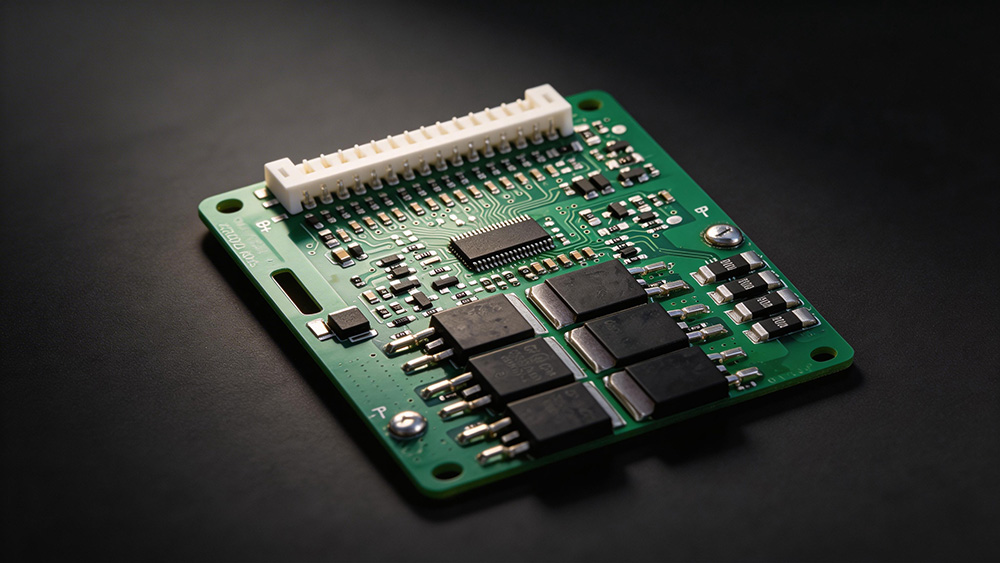
A Battery Management System (BMS) is one of the most critical components inside a lithium battery pack. While lithium cells store energy, the BMS ensures that the battery operates safely, reliably, and within its designed limits.
In medical devices, industrial equipment, testing instruments, and AGV systems, a properly designed BMS is essential for performance stability and regulatory compliance.
As a lithium battery manufacturer serving regulated and industrial markets, LARGE integrates application-specific BMS architecture into customized battery packs.
Key Takeaways
- A BMS monitors, protects, and manages lithium battery operation.
- It prevents unsafe conditions such as overcharge, overdischarge, overcurrent, and overheating.
- BMS improves battery lifespan by maintaining balanced cell operation.
- In regulated industries, BMS design directly impacts safety compliance.
- BMS is not just protection—it is a control and monitoring system.

Core Function: Monitoring
A BMS continuously monitors key battery parameters, including:
- Cell voltage
- Pack voltage
- Charge and discharge current
- Temperature
- State of Charge (SOC)
- In some systems, State of Health (SOH)
These measurements allow the system to determine whether the battery is operating within safe and specified limits.
Without monitoring, protection mechanisms cannot function effectively.
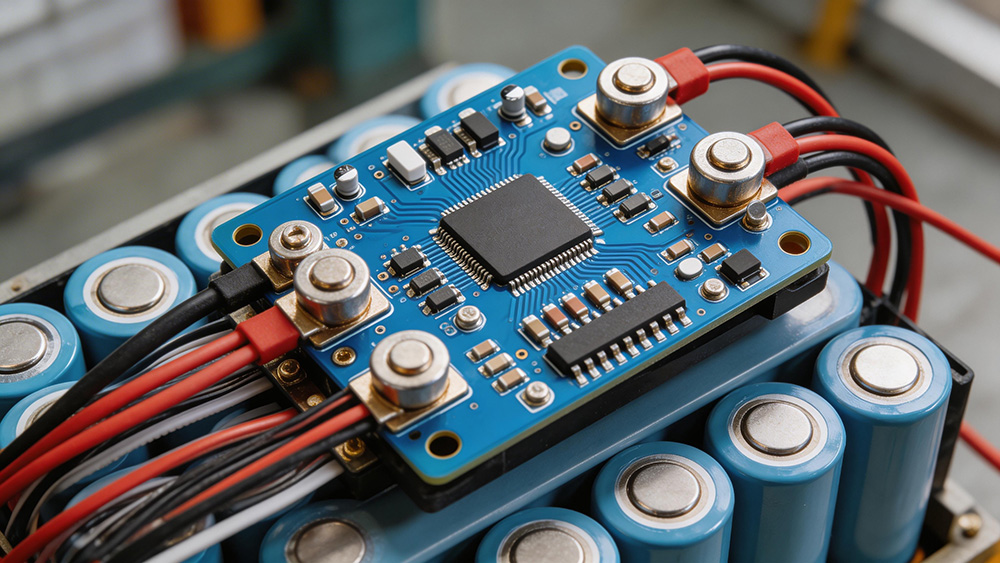
Protection Functions
One of the primary roles of a BMS is to prevent unsafe operating conditions.
Common protection mechanisms include:
- Overcharge Protection
Prevents cell voltage from exceeding safe upper limits.
- Overdischarge Protection
Prevents cell voltage from dropping below minimum limits.
- Overcurrent Protection
Limits excessive current during charge or discharge.
- Short Circuit Protection
Rapidly disconnects the battery under short-circuit conditions.
- Overtemperature Protection
Prevents operation outside allowable temperature range.
In medical and industrial equipment, these protections are essential to ensure operational safety.

Cell Balancing
Lithium battery packs typically consist of multiple cells connected in series and/or parallel. Due to manufacturing tolerances and aging differences, cells may not remain perfectly matched over time.
If one cell reaches its voltage limit earlier than others, the usable capacity of the entire pack is reduced.
A BMS performs cell balancing to maintain voltage consistency across cells.
Two common balancing approaches:
- Passive balancing (dissipating excess energy as heat)
- Active balancing (redistributing energy between cells)
The selection depends on system complexity and performance requirements.

Communication and Data Reporting
In advanced systems, the BMS communicates battery status to external devices.
Common communication interfaces include:
- CAN bus
- SMBus
- UART
- RS485
For industrial and medical applications, real-time battery data can support preventive maintenance and system diagnostics.

BMS and Battery Lifespan
Battery lifespan is influenced not only by cell chemistry but also by how the battery is managed.
A properly configured BMS can:
- Avoid excessive stress
- Prevent deep overdischarge
- Control charging parameters
- Maintain temperature limits
This contributes to improved cycle life and reliability.

BMS in Medical and Industrial Applications
In regulated environments, BMS design must align with safety and certification requirements.
For example:
- Redundant protection strategies may be required
- Fault detection accuracy must meet safety standards
- Reliable communication is necessary for system monitoring
In these applications, BMS is not merely a protection board—it becomes part of the overall safety architecture.
As a lithium battery manufacturer, LARGE develops BMS configurations tailored to medical devices, testing instruments, AGV systems, and industrial equipment.
FAQ
Is a BMS necessary for lithium batteries?
Yes. Lithium batteries require active management to operate safely.
Is BMS only for protection?
No. While protection is critical, BMS also monitors, balances, and communicates battery status.
Does a larger battery require a more complex BMS?
Not necessarily. Complexity depends on voltage level, cell count, safety level, and application requirements.
Final Note
A Battery Management System is essential for ensuring safe, stable, and efficient lithium battery operation. Its role extends beyond simple protection—it forms the control and safety backbone of modern battery packs.
LARGE integrates application-driven BMS solutions into customized lithium battery packs for medical, industrial, and automation applications.