Proper storage is crucial for maintaining lithium battery health, prolonging cycle life, and ensuring safety. Lithium batteries, unlike traditional lead-acid or NiMH types, are more sensitive to voltage, temperature, and humidity. Whether for medical devices, industrial equipment, AGV systems, or testing instruments, following correct long-term storage practices can prevent capacity loss, reduce risk, and improve battery reliability.
LARGE provides guidance for storing custom lithium battery packs to help manufacturers and end users preserve performance over time.
Key Takeaways
- Store lithium batteries at partial state of charge (SoC), ideally 40–60%.
- Maintain storage temperature between 15–25°C (59–77°F).
- Avoid high humidity, direct sunlight, and corrosive environments.
- Check battery voltage every 1–2 months and recharge if needed.
- For long-term storage, BMS or PCM monitoring helps prevent over-discharge.
- Follow safety precautions to avoid swelling, leakage, or thermal hazards.
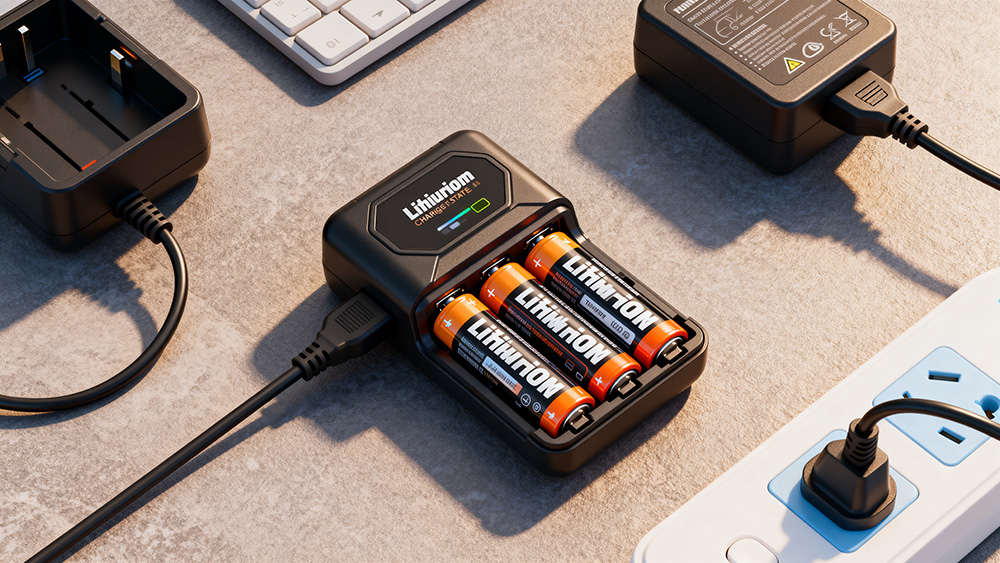
Store Batteries at Partial State of Charge (SoC)
Lithium batteries should ideally be stored at around 40–60% SoC.
- Why not 100%? Fully charged lithium cells increase chemical stress and accelerate capacity fade due to higher electrode potential, which can degrade the electrolyte over time.
- Why not 0%? Fully discharged batteries risk over-discharge. Without proper monitoring, this can trigger protection circuits or even cause permanent capacity loss.
For example, a medical device stored fully charged for 6 months may lose 10–20% of its initial capacity, while a pack stored at 50% SoC can retain most of its capacity. For industrial equipment or AGV systems, partial SoC storage ensures the battery is ready for immediate deployment after storage.
Practical tip: If possible, store each battery pack at exactly 50% SoC, which balances chemical stability and readiness for use.

Control Storage Temperature
Temperature strongly affects lithium battery performance and degradation.
- Ideal long-term storage: 15–25°C (59–77°F)
- High temperatures (>40°C / 104°F): Accelerates chemical degradation and capacity fade
- Freezing temperatures (<0°C / 32°F): Risks electrolyte damage and reduced conductivity
Temperature control is especially important for lithium packs used in medical devices and industrial systems that may remain idle for months. For AGV or robotics applications, batteries stored in uncontrolled warehouses or hot vehicle compartments can degrade faster if not temperature-managed.
Engineering insight: Every 10°C increase above 25°C roughly doubles the chemical aging rate of a lithium cell, making temperature management critical for long-term storage.

Avoid High Humidity and Direct Sunlight
Excess moisture can corrode terminals, metal housing, and connectors.
Direct sunlight raises surface temperature and may damage packaging materials or cell adhesives.
Recommended storage environment:
- Dry, well-ventilated area
- Away from UV exposure
- Avoid corrosive chemicals, solvents, or salt-laden air
For example, storing lithium packs for testing instruments in coastal environments without proper sealing can accelerate terminal corrosion and degrade insulation over time.
Periodic Voltage Check and Recharging
Even during storage, lithium batteries slowly self-discharge. To prevent over-discharge and maintain health:
- Check battery voltage every 1–2 months
- Recharge to 40–60% SoC if voltage drops below 3.6–3.7V per cell
- For packs with BMS or PCM, low-voltage alerts can help maintain proper charge without manual monitoring
Why this matters: If a battery is left too long at low voltage, even a small pack can trigger over-discharge protection. In extreme cases, irreversible chemical changes occur in the anode, permanently reducing capacity.
Practical scenario: Industrial instrument packs or AGV batteries stored for 3 months may require a “top-up” charge to avoid self-discharge dropping below safe thresholds.
Long-Term Storage Duration
- <6 months: Maintain partial SoC, moderate temperature, and dry environment
- 6–12 months: Check voltage at least once per month; recharge as necessary
- >12 months: Consider cycling the battery once during storage to maintain chemical balance
Tip: Even with BMS/PCM monitoring, mechanical inspection is useful: check for swelling, deformation, or leakage before redeploying batteries.
Safety Considerations
While lithium batteries are generally safe when stored properly, long-term storage carries potential risks:
- Over-discharge: May permanently reduce capacity
- Swelling: Indicates internal gas buildup; avoid using swollen batteries
- Short circuits: Keep batteries isolated from conductive materials
- Thermal hazards: Avoid placing near heat sources
Following proper storage practices minimizes these risks and ensures batteries remain safe for deployment.
FAQ
Can I store a fully charged lithium battery long-term?
No. Storing at 100% charge accelerates capacity fade and reduces long-term lifespan.
Can lithium batteries be stored in a refrigerator?
Refrigerators may cause condensation, which can corrode terminals. Room temperature storage is recommended.
How often should I check the battery during storage?
Every 1–2 months. For packs with BMS or PCM, automated monitoring may reduce manual checks.
Can I leave batteries in devices during long-term storage?
If devices include a continuous drain (even standby current), batteries may over-discharge. Removing batteries or disconnecting from circuits is recommended.
Conclusion
Proper storage is essential for preserving lithium battery performance, safety, and lifespan. Maintaining partial charge, controlling temperature and humidity, avoiding direct sunlight, and performing periodic checks can extend battery health during long-term storage.
For medical devices, industrial equipment, AGV systems, and professional instruments, following these guidelines ensures batteries are ready for use when needed.
LARGE provides guidance and custom solutions for safe long-term storage of lithium battery packs, helping manufacturers and end users protect battery performance over months or years of storage.