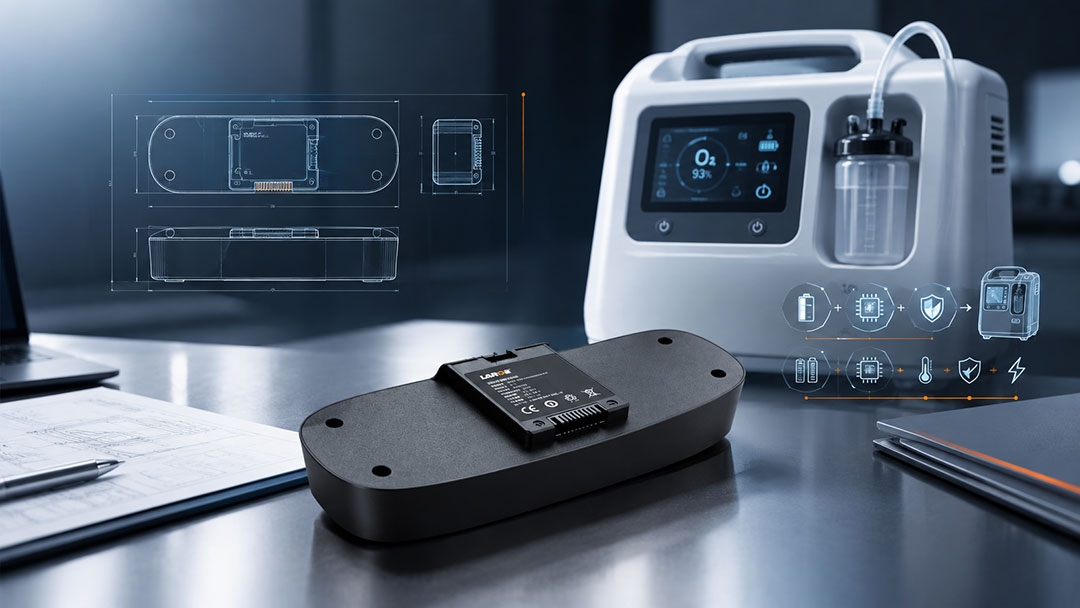
Medical battery design requires careful chemistry selection, protection circuits, and compliance with IEC 62133 and IEC 60601-1 to ensure safety and reliability.

There are a lot of batteries that fulfill the needs of customers. But it is very important to select an effective battery. The effective battery is one with good quality and reasonable price.
Those charging practices should be followed that are effective. You should pay attention to the charging practices because any unhealthy practice may damage the battery or device.
Batteries are an important element of illuminated disposable medical devices, and the battery type that you use in homes or at work places are also very important.
Cobalt acid lithium battery has high discharge platform, high specific capacity, stable product performance, and good cycle performance, but its safety performance is poor.
Alkaline and lithium batteries are the two types of batteries that can be used to power personal devices. These batteries have different combinations of chemicals and voltages.
During the 1970s John Goodenough and Stanley Whittingham developed a new technology of using lithium-ion for power supply. These batteries are designed so that lithium ions move from anode to cathode through the electrolyte.