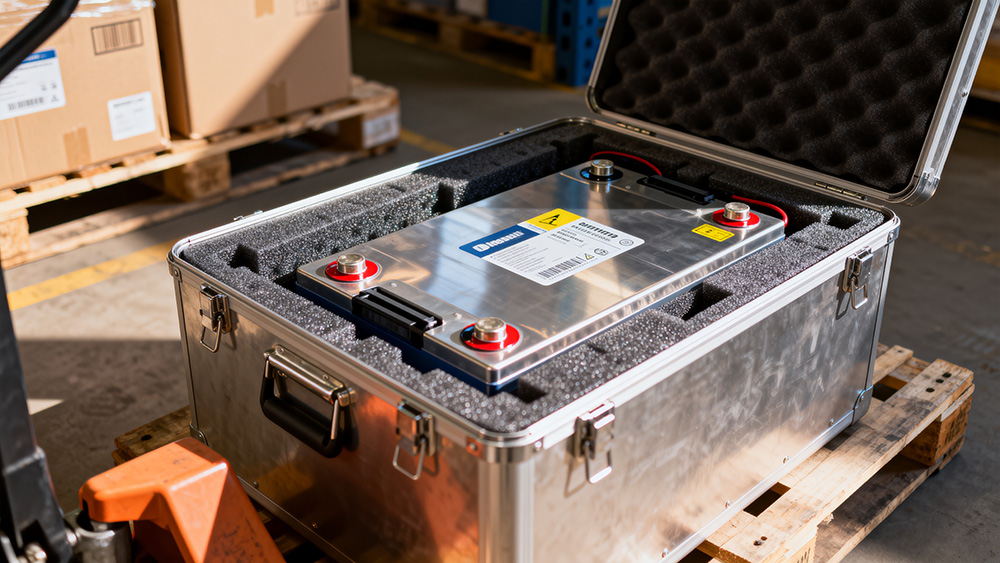
Lithium batteries are classified as dangerous goods for transportation under international regulations. Whether used in medical devices, industrial equipment, testing instruments, or AGV systems, lithium battery shipments must comply with strict safety and regulatory standards.
As a professional lithium battery manufacturer serving medical and industrial sectors, LARGE ensures that battery shipments comply with applicable international transport regulations.
Key Takeaways
- Lithium batteries are regulated as dangerous goods in air, sea, and road transport.
- UN38.3 testing is mandatory before lithium batteries can be transported.
- Packaging, labeling, and documentation requirements vary depending on battery type and transport mode.
- Lithium-ion and lithium metal batteries are classified under different UN numbers.
- Improper declaration or packaging may result in shipment rejection, fines, or safety risks.

Classification of Lithium Batteries
Lithium batteries are divided into two main categories for transport purposes:
Lithium-ion batteries (rechargeable)
Common UN numbers:
- UN3480 – Lithium-ion batteries
- UN3481 – Lithium-ion batteries contained in equipment or packed with equipment
These are typically used in medical devices, testing instruments, power tools, and AGV systems.
Lithium metal batteries (non-rechargeable)
Common UN numbers:
- UN3090 – Lithium metal batteries
- UN3091 – Lithium metal batteries contained in equipment or packed with equipment

UN38.3 Testing Requirements
Before lithium batteries can be transported internationally, they must pass UN38.3 testing in accordance with the United Nations Manual of Tests and Criteria.
The UN38.3 test sequence includes evaluations such as:
- Altitude simulation
- Thermal testing
- Vibration
- Shock
- External short circuit
- Impact or crush
- Overcharge
- Forced discharge
Without valid UN38.3 test reports, lithium batteries cannot legally be shipped by air or sea.

State of Charge (SOC) Restrictions
For air transport, lithium-ion batteries shipped under UN3480 are typically required to be transported at a state of charge not exceeding 30% of rated capacity, unless special approvals apply.
This restriction is intended to reduce transport risk.

Packaging and Labeling Requirements
Lithium battery packaging must:
- Prevent short circuit
- Protect against damage during transport
- Meet UN performance packaging standards when applicable
- Include appropriate lithium battery handling labels and hazard labels
Documentation may include:
- UN38.3 test summary
- MSDS (Safety Data Sheet)
- Dangerous goods declaration (if required)
- Air waybill or shipping documentation

Mode of Transport Considerations
- Air Transport (IATA)
Air transport regulations are generally the most restrictive, especially for standalone lithium-ion batteries.
- Sea Transport (IMDG Code)
Sea transport follows the International Maritime Dangerous Goods (IMDG) Code.
- Road Transport (ADR / DOT)
Road transport regulations vary by region (e.g., ADR in Europe, DOT in the United States).

Compliance Responsibility
Shippers are responsible for ensuring compliance with applicable transport regulations. Manufacturers must provide accurate technical documentation to support safe shipment.
As a lithium battery manufacturer serving regulated industries, LARGE provides:
- UN38.3 documentation
- MSDS support
- Proper labeling guidance
- Technical clarification for customers
FAQ
Is UN38.3 mandatory for lithium battery transport?
Yes. Lithium batteries must pass UN38.3 testing before international transport.
Can lithium batteries be shipped by air?
Yes, but strict requirements apply, including SOC limits and packaging rules.
Who is responsible for dangerous goods declaration?
The shipper is generally responsible for proper declaration.
Final Note
Lithium battery transportation requires strict regulatory compliance and accurate documentation. Regulations may be updated periodically; therefore, it is important to verify current requirements before shipment.
LARGE supports customers in preparing compliant lithium battery shipments for medical and industrial applications.