Introduction
Medical-device battery sourcing involves more than choosing a cell with sufficient capacity. Buyers also need to consider power requirements, battery size, runtime, pack integration, and quality and safety documentation.
This article reviews ten medical battery manufacturers in China, comparing their stated cell and battery-pack capabilities, application focus, and available quality or regulatory information to help buyers evaluate potential suppliers.
The following ten manufacturers offer a range of battery technologies and pack solutions for medical and portable devices:
-
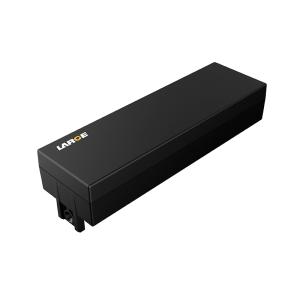
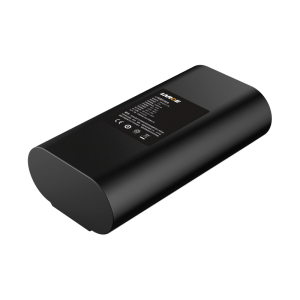
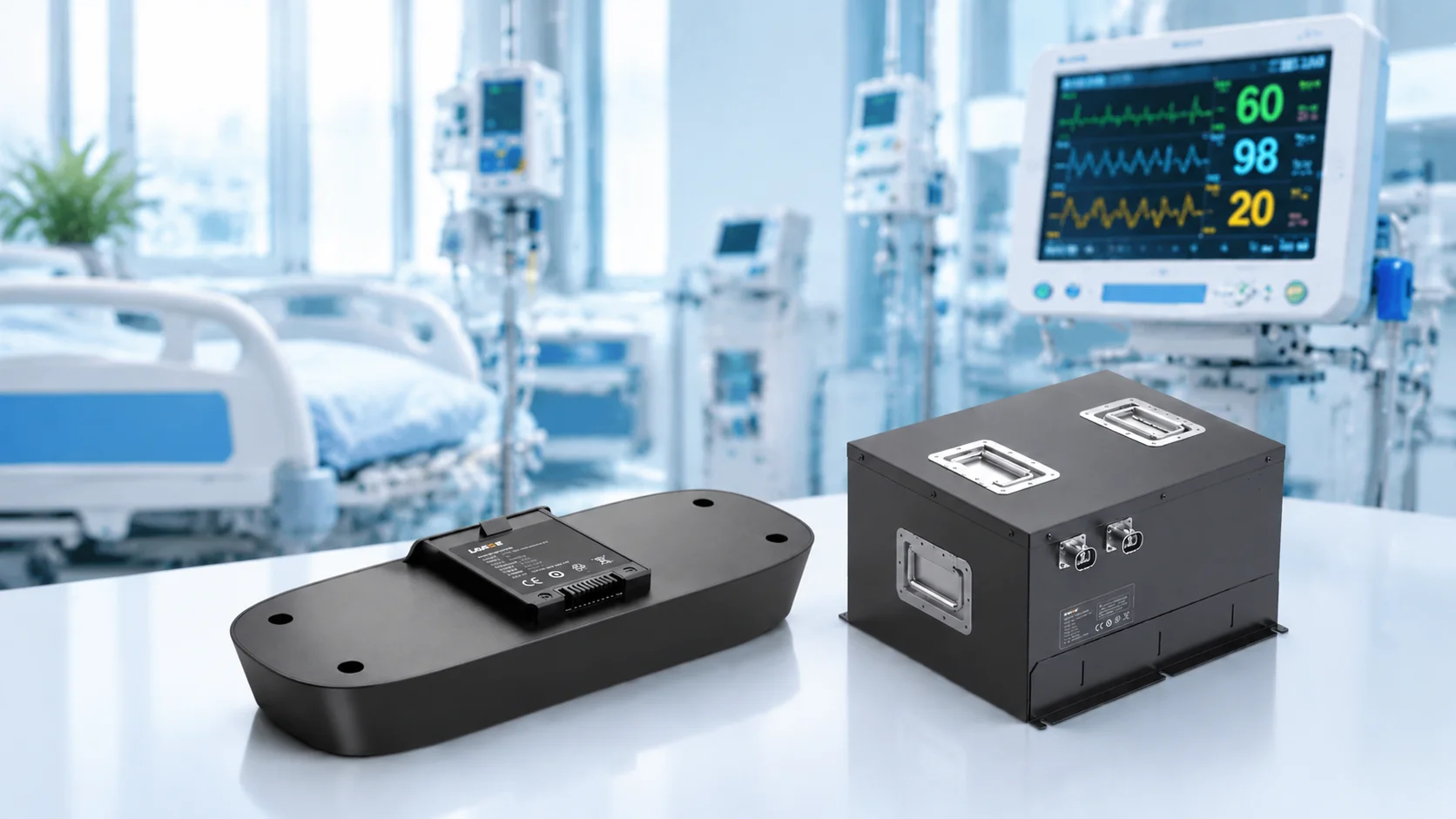
LARGE Battery: custom lithium-ion battery packs for portable diagnostic devices.
-
Shenzhen Xinya Blue Sky Battery Energy: flexible lithium-ion packs for handheld instruments.
-
Beijing Zhixin Network Energy: smart packs with monitoring electronics.
-
CATL: high-volume cells with rigorous safety testing.
-
BYD: integrated cells and packs for power-hungry equipment.
-
EVE Energy: compact cells for long-life devices.
-
Grepow: curved pouch cells for wearables.
-
Highpower: nickel-metal hydride and lithium packs for cost-sensitive devices.
-
Sunwoda: packs with broad certification coverage.
-
Desay Battery: packs for portable diagnostic hardware.
This ranking of the top 10 medical battery manufacturers considers technical capabilities, application specialties, regulatory certifications, and cost considerations. The comparison snapshot and detailed profiles below show where each battery manufacturer fits best.
Key Takeaways
-
Define your device’s voltage, average and peak current, runtime, size, and weight requirements before selecting a battery.
-
Decide whether a standard cell or a custom battery pack with integrated BMS is more suitable for your device.
-
Review the manufacturer’s quality-system documentation and confirm the certification scope and validity.
-
Request safety and performance test reports for the specific battery configuration under consideration.
-
Compare total cost of ownership, including customization, testing, MOQ, lead time, and long-term supply support.
-
Shortlist manufacturers based on their demonstrated cell and pack capabilities, then verify their suitability for your device.
Top 10 Medical Battery Manufacturers: Comparison
Technical And Application Comparison
The table below places the top 10 medical battery manufacturers side by side. Energy density and cycle life appear as relative bands, not exact figures, because each supplier tunes cells to the device brief.
| Manufacturer | Chemistry Focus | Energy Density | Cycle Life | Device Applications |
|---|---|---|---|---|
| LARGE Battery | Custom lithium-ion | Medium–high | Medium–high | Portable diagnostic devices |
| Xinya Blue Sky | Lithium-ion | Medium | Medium | Handheld instruments |
| Zhixin Network Energy | Lithium-ion with smart electronics | Medium | Medium–high | Monitored portable equipment |
| CATL | Lithium-ion | High | High | High-volume device platforms |
| BYD | Lithium-ion, cell plus pack | High | High | Power-hungry equipment |
| EVE Energy | Lithium-ion | Medium–high | High | Long-life devices |
| Grepow | Curved pouch lithium-ion | Medium | Medium | Wearables |
| Highpower | Nickel-metal hydride and lithium | Low–medium | Medium | Cost-sensitive devices |
| Sunwoda | Lithium-ion | Medium–high | Medium–high | Broad portable range |
| Desay Battery | Lithium-ion | Medium | Medium | Portable diagnostic hardware |
Chemistry drives the fit. Grepow’s curved pouch format suits wrist-worn devices. Highpower’s nickel-metal hydride line serves budget instruments. CATL and BYD lead on energy density for demanding loads.
Certification And Cost Indicators
Certification coverage separates the group more sharply than cell performance. Most listed battery pack manufacturers hold ISO 13485 and IEC 62133, and several add UL and CE marks. Buyers should confirm the exact certificate scope for each lithium-ion battery pack, since a site-level ISO 13485 audit differs from a product-level listing.
Cost indicators run low, medium, and high. Highpower sits at the low end. LARGE Battery, Xinya Blue Sky, and Desay occupy the medium band. CATL, BYD, and Sunwoda trend higher on unit price, yet strong quality control and thermal management can lower total cost of ownership. No single manufacturer wins on every axis; each fits a different device profile.
Dongguan Large Electronics Co., Ltd.
LARGE Battery
Technical Fit
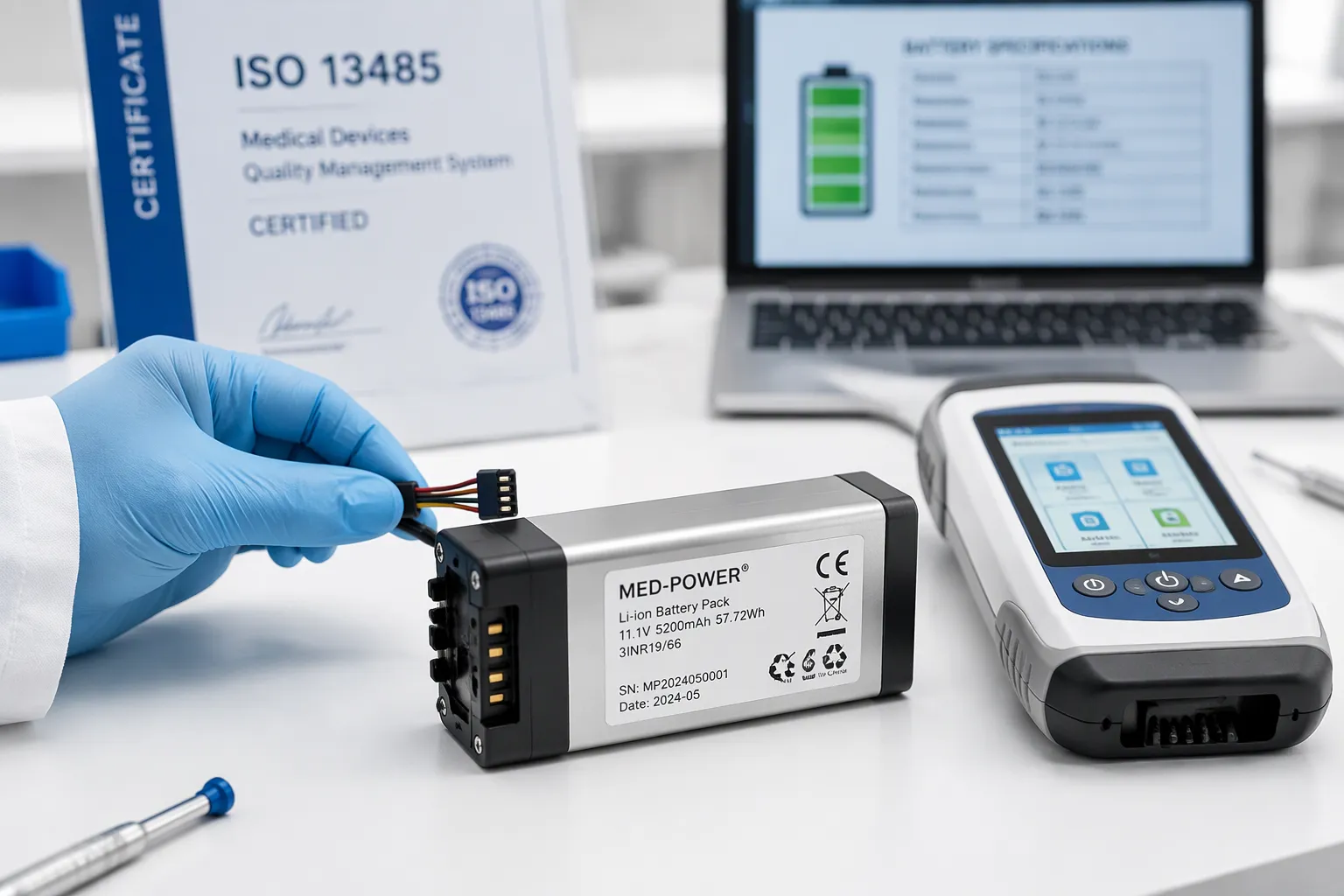
LARGE Battery builds custom lithium-ion battery packs for portable diagnostic devices. The company tunes cell selection, pack geometry, and connector layout to the device brief rather than selling a fixed catalog part. That approach suits instrument makers who need a pack that fits an existing enclosure and a defined discharge profile.
The earlier comparison places LARGE Battery in the medium–high band for energy density and cycle life. Those bands reflect a design that balances runtime against pack size, which matters for handheld and cart-mounted diagnostic tools. Buyers who need a standard cell format at high volume will find other suppliers on this list a closer match. Buyers who need a tailored lithium-ion battery pack for a specific device will find the custom route more direct.
Compliance And Cost
Compliance documentation is the strongest part of the LARGE Battery profile. SGS United Kingdom Ltd certifies Dongguan Large Electronics Co., Ltd., the manufacturing entity behind Large Battery, to ISO 13485:2016 and EN ISO 13485:2016. The certified scope covers the design and manufacture of lithium batteries for non-implantable active medical devices.
| Item | Detail |
|---|---|
| Certification body | SGS United Kingdom Ltd |
| Certified entity | Dongguan Large Electronics Co., Ltd. |
| Standard | ISO 13485:2016 and EN ISO 13485:2016 |
| Certified scope | Design and manufacture of lithium batteries for non-implantable active medical devices |
| Certificate number | CN25/00006928 |
| Certified site | No. 8, Jingyi Road, Dongcheng Street, Dongguan City, Guangdong Province, P.R. China |
| Validity period | 15 October 2025 to 14 October 2028, subject to satisfactory surveillance audits |
The certificate runs from 15 October 2025 to 14 October 2028, subject to satisfactory surveillance audits. No specific IEC 62133 certification status is stated. The company can provide available IEC 62133, UL 2054, and UN 38.3 documentation for a proposed battery model once the buyer shares the pack model, intended application, and target market.
Cost sits in the medium band. Custom tooling and per-device engineering add upfront work, yet the resulting pack can reduce total cost of ownership through better thermal management and fewer field returns. Buyers should weigh that trade-off against their volume forecast.
Shenzhen Xinya Blue Sky Battery Energy
Technical Fit
Shenzhen Xinya Blue Sky Battery Energy focuses on lithium-ion packs for handheld instruments. The comparison table places the company in the medium band for energy density and cycle life. That profile suits devices that run on a single shift, recharge overnight, and prioritize a slim, light enclosure over maximum runtime.
The manufacturer works from a device brief rather than a fixed catalog. Pack geometry, connector choice, and protection circuit layout follow the instrument’s housing and discharge curve. Handheld diagnostic tools, portable monitors, and field testers are the natural fit. Buyers who need a standard cell format at very high volume will find other suppliers on this list a closer match.
Compliance And Cost
Compliance deserves direct verification. The evidence supplied here does not confirm a specific ISO 13485 or IEC 62133 certificate for this supplier. Buyers should request the certificate number, the certified site, and the product scope before design freeze. A site-level audit and a product-level listing are different documents, and the lithium-ion battery pack in the design file must fall inside the stated scope.
A custom lithium-ion battery solution adds engineering hours upfront. The payoff comes later, when a well-matched pack reduces field returns and extends service intervals. Buyers should compare total cost of ownership across battery pack manufacturers, not unit price alone.
Design teams should also confirm how the supplier handles thermal management and cell balancing inside the sealed pack. Ask for test data on overcharge, short circuit, and drop. Those results tell a buyer more about safety and reliability than a datasheet headline. A short audit visit to the Shenzhen facility settles most open questions.
Beijing Zhixin Network Energy
Technical Fit
Beijing Zhixin Network Energy builds lithium-ion packs with integrated monitoring electronics. The comparison table places the company in the medium band for energy density and the medium–high band for cycle life. That profile suits monitored portable equipment, where the pack reports state of charge, temperature, and fault conditions to the host device.
Buyers who need a plain pack with no communication interface may find that a shortlist of custom lithium battery manufacturers in China offers a closer match.
Compliance And Cost
Compliance deserves direct verification. The evidence supplied here does not confirm a specific ISO 13485 or IEC 62133 certificate for this supplier. Buyers should request the certificate number, the certified site, and the product scope before design freeze. A site-level audit and a product-level listing are different documents, and the lithium-ion battery pack in the design file must fall inside the stated scope.
Cost sits in the medium band. The monitoring electronics add component cost and engineering hours upfront. The payoff comes later, when early fault detection reduces field returns and extends service intervals. Buyers should compare total cost of ownership across battery pack manufacturers , not unit price alone.
Design teams should also confirm how the supplier validates the monitoring firmware and the cell balancing logic inside the sealed pack. Ask for test data on overcharge, short circuit, and thermal runaway response. Those results tell a buyer more about safety and reliability than a datasheet headline. A short audit visit to the Beijing facility settles most open questions.
CATL
Technical Fit
CATL’s high-volume lithium-ion cell production can support medical device platforms that require long runtime and a supply line that scales with demand. The comparison table places the company in the high band for energy density and cycle life.
The company’s strength lies in cell consistency at scale. Large production runs keep cell-to-cell variation low, and that consistency supports predictable pack performance across a device fleet. High-volume device platforms, such as patient monitors and portable imaging accessories, are the natural fit. Buyers who need a small custom pack with per-device engineering will find other manufacturers on this list a closer match.
Compliance And Cost
Compliance deserves direct verification. The evidence supplied here does not confirm a specific ISO 13485 or IEC 62133 certificate for this supplier. Buyers should request the certificate number, the certified site, and the product scope before design freeze. A site-level audit and a product-level listing are different documents, and the lithium-ion battery pack in the design file must fall inside the stated scope.
Cost trends higher on unit price. Strong quality control and thermal management can lower total cost of ownership, so buyers should weigh the full service life against the quote. Design teams should also confirm how the supplier validates safety at the cell and pack level. Ask for test data on overcharge, short circuit, and thermal runaway response. Those results tell a buyer more about reliability than a datasheet headline. A short audit visit to the production site settles most open questions.
BYD
Technical Fit
BYD’s integrated cell-and-pack production supports a supply chain that covers both cells and finished packs. The comparison table places the company in the high band for energy density and cycle life. That profile suits power-hungry equipment, such as portable imaging systems and transport ventilators, where runtime and load handling matter more than a slim enclosure.
Vertical integration separates BYD from assemblers that buy cells on the open market. Cell design, pack assembly, and the battery management system come from one organization. Device teams gain a shorter qualification path and fewer handoffs between suppliers. Buyers who need a small custom pack with per-device engineering will find other manufacturers on this list a closer match.
Compliance And Cost
Compliance deserves direct verification. The evidence supplied here does not confirm a specific ISO 13485 or IEC 62133 certificate for this supplier. Buyers should request the certificate number, the certified site, and the product scope before design freeze. A site-level audit and a product-level listing are different documents, and the lithium-ion battery pack in the design file must fall inside the stated scope.
Cost trends higher on unit price. Strong quality control and thermal management can lower total cost of ownership across the service life. Buyers comparing battery pack manufacturers should weigh field return rates and service intervals against the quote. Design teams should also confirm how the supplier validates safety at the cell and pack level. Ask for test data on overcharge, short circuit, and thermal runaway response. Those results tell a buyer more about reliability than a datasheet headline. A short audit visit to the production site settles most open questions.
EVE Energy
Technical Fit
EVE Energy builds compact lithium-ion cells for long-life devices. The comparison table places the company in the medium–high band for energy density and the high band for cycle life. That profile suits implantable-adjacent accessories, continuous monitors, and portable instruments that stay in service for years between replacements.
Cell consistency across a production run matters as much as headline capacity here. A device fleet that logs thousands of charge cycles needs every pack to age at a similar rate. EVE Energy’s high cycle-life band supports that goal. Buyers who need a curved or unusually shaped pack will find other manufacturers on this list a closer match. Buyers who need a standard cylindrical or prismatic cell inside a defined enclosure will find the fit more direct.
Compliance And Cost
EVE Energy states ISO 13485 medical device industry quality management system certification, along with UL1642 and IEC60086 safety certification. Buyers should still request the certificate number, the certified site, and the product scope before design freeze. A site-level audit and a product-level listing are different documents, and the lithium-ion battery pack in the design file must fall inside the stated scope.
Cost sits in the medium–high band. Long cycle life can lower total cost of ownership, because fewer packs reach end of service during the device warranty. Buyers comparing lithium-ion battery pack manufacturers should weigh that benefit against the unit quote. Design teams should also confirm how the supplier validates safety at the cell and pack level. Ask for test data on overcharge, short circuit, and thermal response. Those results tell a buyer more about reliability than a datasheet headline. A short audit visit to the production site settles most open questions.
Grepow
Technical Fit
Grepow builds curved pouch cells for wearable devices. The comparison table places the company in the medium band for energy density and cycle life. That profile suits wrist-worn monitors, patch sensors, and other body-worn instruments where a flat, shaped pack must follow the contour of the housing.
The pouch format separates this supplier from cylindrical cell makers. A curved cell fills space that a rigid can cannot reach, and the thin profile keeps the device light on the wrist. Design teams gain freedom in industrial design at the cost of some capacity per unit volume. Buyers who need maximum runtime from a rectangular cavity will find other manufacturers on this list a closer match. Buyers who need a shaped lithium-ion battery pack for a wearable will find the fit more direct.
Compliance And Cost
Grepow states that it manufactures under ISO 13485, the quality management standard specific to the medical device industry. The company also points to IEC 62133, the safety standard for portable sealed secondary cells, as a core requirement for medical batteries. Buyers can request the following test reports under the ISO 13485 system:
-
IEC 62133
-
UL 1642
-
UL 2054
-
CE
-
RoHS
-
UN 38.3
That list covers safety, transport, and restricted-substance requirements in one package. Buyers should still confirm the certificate scope and the certified site before design freeze. A site-level audit and a product-level listing are different documents, and the lithium ion battery pack in the design file must fall inside the stated scope.
Cost sits in the medium band. Shaped pouch tooling adds upfront engineering work. The payoff comes later, when a well-matched pack reduces field returns and extends service intervals. Buyers comparing battery pack manufacturers should weigh total cost of ownership against the unit quote. Teams that shortlist lithium-ion battery pack manufacturers for a wearable program should ask for cycle-life data at the expected discharge depth, since the medium band in the table reflects a design trade-off rather than a fixed limit.
Highpower
Technical Fit
Highpower supplies nickel-metal hydride and lithium packs for cost-sensitive devices. The comparison table places the company in the low–medium band for energy density and the medium band for cycle life. That profile suits budget instruments, backup units, and portable devices where purchase price drives the sourcing decision more than maximum runtime.
The dual chemistry line gives design teams a real choice. Nickel-metal hydride cells cost less per unit and tolerate abuse well, which fits simple devices with modest energy needs. Lithium cells raise runtime and cut weight for instruments that need more capacity. Buyers who need a curved pouch or a smart pack with monitoring electronics will find other manufacturers on this list a closer match. Buyers who need a dependable battery at a low unit price will find the fit more direct.
Compliance And Cost
Compliance deserves direct verification. The evidence supplied here does not confirm a specific ISO 13485 or IEC 62133 certificate for this supplier. Buyers should request the certificate number, the certified site, and the product scope before design freeze. A site-level audit and a product-level listing are different documents, and the lithium-ion battery pack in the design file must fall inside the stated scope.
Cost sits at the low end of the group. That position makes Highpower a natural shortlist entry for high-volume, price-sensitive programs. Teams comparing battery pack manufacturers should still weigh field return rates and service intervals against the quote. A low unit price can hide higher replacement costs over the device warranty.
Design teams should confirm how the supplier validates safety at the cell and pack level. Ask for test data on overcharge, short circuit, and thermal response. Those results tell a buyer more about reliability than a datasheet headline. Teams that shortlist lithium-ion battery pack manufacturers for a budget program should also confirm the chemistry choice early, since nickel-metal hydride and lithium ion battery pack designs carry different transport and handling rules.
Sunwoda
Technical Fit
Sunwoda builds lithium-ion packs across a broad portable device range. The comparison table places the company in the medium–high band for energy density and cycle life. That profile suits device teams that need dependable runtime without a custom cell format.
The broad portfolio separates this supplier from specialists. A single vendor can cover several product lines, and that range simplifies sourcing for a device family with different power needs. Portable monitors, handheld diagnostic tools, and home-care instruments are the natural fit. Buyers who need a curved pouch for a wearable will find other manufacturers on this list a closer match. Buyers who need one supplier across a mixed device portfolio will find the fit more direct.
Compliance And Cost
Sunwoda earns its place on this list partly through broad certification coverage. The comparison table flags that strength, and buyers should still confirm the exact scope. The evidence supplied here does not confirm a specific ISO 13485 or IEC 62133 certificate for this supplier. Buyers should request the certificate number, the certified site, and the product scope before design freeze. A site-level audit and a product-level listing are different documents, and the lithium-ion battery pack in the design file must fall inside the stated scope.
Cost trends higher on unit price. Strong quality control and thermal management can lower total cost of ownership across the service life. Teams comparing battery pack manufacturers should weigh field return rates and service intervals against the quote. Design teams should also confirm how the supplier validates safety at the cell and pack level. Ask for test data on overcharge, short circuit, and thermal response. Those results tell a buyer more about reliability than a datasheet headline. A short audit visit to the production site settles most open questions. Teams that shortlist a lithium ion battery pack for a multi-device program should confirm that one certificate scope covers every model in the family.
Desay Battery
Technical Fit
Desay Battery builds packs for portable diagnostic hardware. The comparison table places the company in the medium band for energy density and cycle life. That profile suits handheld analyzers, bedside monitors, and cart-mounted diagnostic units that run a full shift and recharge overnight.
Desay’s background in consumer electronics assembly shapes its approach. The company runs high-volume production lines and applies that discipline to medical pack assembly. Device teams gain predictable lead times and consistent pack quality across a production run. Buyers who need a curved pouch for a wearable will find other manufacturers on this list a closer match. Buyers who need a dependable lithium-ion battery pack for a diagnostic instrument will find the fit more direct.
Compliance And Cost
Compliance deserves direct verification. The evidence supplied here does not confirm a specific ISO 13485 or IEC 62133 certificate for this supplier. Buyers should request the certificate number, the certified site, and the product scope before design freeze. A site-level audit and a product-level listing are different documents, and the lithium ion battery pack in the design file must fall inside the stated scope.
Cost sits in the medium band. High-volume lines spread tooling costs across many units, and that scale can hold the unit quote steady. Teams comparing battery pack suppliers should still weigh field return rates and service intervals against the quote. A short audit visit to the production site settles most open questions about process control. Design teams should also confirm how the supplier validates safety at the cell and pack level. Ask for test data on overcharge, short circuit, and thermal response. Those results tell a buyer more about reliability than a datasheet headline. A well-matched battery reduces field returns and extends service intervals across the device warranty.
How To Choose A Medical Battery Manufacturer
Match Chemistry To Device Needs
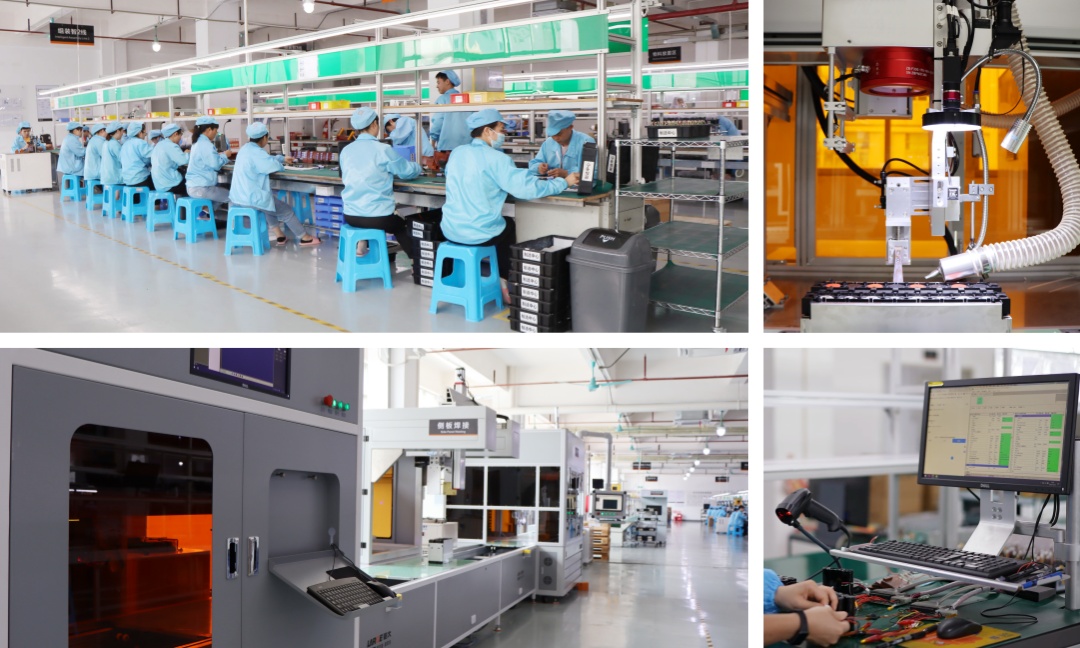
Device requirements come first. A successful choice rests on three simultaneous matches: the electrochemistry matches the load, the mechanical dimensions match the available space, and the certification scope matches the target markets. A cell that fits mechanically can still be electrically wrong, so teams should never select on the largest capacity number alone.
A practical workflow keeps the decision grounded. Record nominal voltage, operating current, peak current, runtime target, and duty cycle. Measure the compartment, connector clearance, and terminal type. Then decide the safety architecture: a protected cell, an unprotected cell managed by the host, or a complete pack with a battery management system. Finally, test representative batteries in the final device across the expected temperature and load range before approving production.
Chemistry then follows the device. Primary lithium cells suit disposable designs, while rechargeable lithium-ion chemistry serves reusable instruments. Zinc-air fits vented hearing aid enclosures. Implantable pacemakers call for ultra-high reliability chemistries with a 15+ year life. Among the top 10 medical battery manufacturers, Grepow fits shaped wearable packs, Highpower fits budget instruments, and EVE Energy fits long-life devices.
Compare Lithium-Ion Battery Pack Manufacturers
Certification review comes second. Buyers should demand original documentation, not copies of marketing claims. A lithium-ion battery pack manufacturer should supply a UN 38.3 test summary, an MSDS, RoHS and REACH declarations, and UL 1642 or UL 2054 certificates for North American shipments. The ISO 13485:2016 quality management standard and IEC 62133-2 lithium battery safety requirements belong on the shortlist for any medical devices program. Confirm the certified site and product scope, because a site-level audit differs from a product-level listing.
Cost comes last, measured as total cost of ownership. Unit price alone misleads. A custom-pack manufacturer with higher upfront tooling can lower field returns and extend service intervals. A low-cost supplier can hide replacement costs across the warranty. Teams sourcing portable medical equipment should weigh cycle life, thermal performance, and safety documentation against the quote.
No single winner emerges. A battery pack manufacturer that fits a wearable program may not fit a cart-mounted monitor. Buyers comparing battery pack manufacturers should match each supplier to the device profile, verify safety certifications, and treat consistent quality control as part of the price.
The top 10 medical battery manufacturers split by device fit. EVE Energy serves long-life and implantable-adjacent devices. Grepow covers wearables with curved pouch cells. LARGE Battery, Desay Battery, and Xinya Blue Sky suit diagnostic instruments. CATL, BYD, Sunwoda, Zhixin, and Highpower fit portable and cost-sensitive equipment.
Common sourcing scenarios have clear starting points. Wearable programs begin with Grepow. Diagnostic teams shortlist LARGE Battery or Desay. High-volume platforms favor CATL or BYD.
Three takeaways stand out. Match chemistry to device requirements first. Verify ISO 13485 and IEC 62133 compliance before design freeze. Treat cost as total cost of ownership, not unit price alone. Watch lithium-ion battery pack manufacturing in 2026 for tighter certification scopes and smarter packs.
FAQ
Which certifications should a buyer verify before design freeze?
Buyers should request the certificate number, the certified site, and the product scope for ISO 13485 and IEC 62133. A site-level audit differs from a product-level listing. The pack in the design file must fall inside the stated scope. LARGE Battery and Grepow publish certification details; other suppliers require direct confirmation.
How does a device team choose between custom and standard packs?
Custom packs suit instruments with a fixed enclosure and a defined discharge profile. Standard cell formats suit high-volume platforms where cell consistency matters most. Teams should record voltage, current, runtime target, and compartment dimensions first. That data points to the right fit among the top 10 medical battery manufacturers.
Which supplier fits a wearable program?
Grepow builds curved pouch cells that follow the contour of wrist-worn and patch devices. The shaped format fills space a rigid can cannot reach. Teams needing maximum runtime from a rectangular cavity should look elsewhere. Cycle-life data at the expected discharge depth belongs in the evaluation.
How should buyers compare cost across suppliers?
Unit price alone misleads. Buyers should weigh cycle life, thermal performance, and safety documentation against the quote. A higher upfront tooling cost can lower field returns and extend service intervals. Highpower sits at the low end; CATL, BYD, and Sunwoda trend higher. Each battery fits a different device profile.
What documentation should accompany a medical battery order?
A UN Manual of Tests and Criteria, subsection 38.3 reference, an MSDS, and RoHS and REACH declarations form part of the documentation baseline. Buyers should also request the manufacturer’s lithium battery test summary , which records the applicable transport-test information. North American shipments may also require UL 1642 or UL 2054 documentation, depending on the product and market.