Introduction
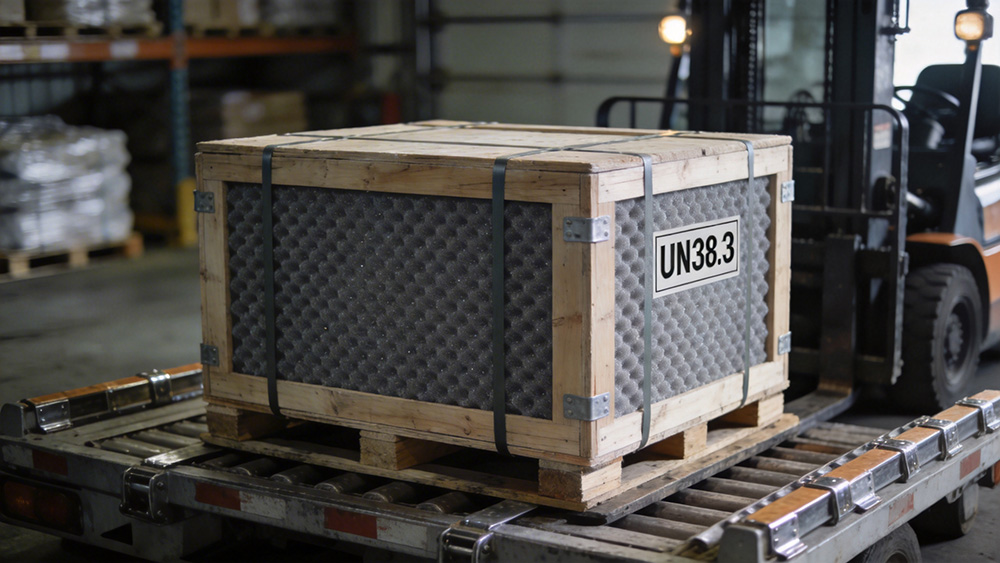
UN38.3 is the global safety standard that regulates the transportation of lithium batteries by air, sea, rail, and road. It sets strict testing and compliance requirements to reduce risks of fire, explosion, and thermal runaway during shipping.
UN38.3 certification is mandatory for all lithium batteries and battery-powered devices being transported internationally. Without it, shipments will be detained, rejected, or banned entirely.
Lithium batteries present serious hazards if damaged, exposed to extreme temperatures, short circuited, or improperly charged. Thermal runaway can lead to violent fires and explosions that are difficult to extinguish.Forward-thinking brands design products to meet UN38.3 requirements from the earliest development stage to avoid delays and ensure safe global distribution.
Key Takeaways
- UN38.3 certification is legally required for all lithium battery transport worldwide.
- Compliance prevents fires, explosions, and safety incidents during shipping.
- UN38.3 includes 8 standardized tests to verify battery safety under real world transport stress.
- Failure to comply results in shipment delays, fines, seized goods, and safety risks.Planning for UN38.3 during product design saves time, cost, and logistical disruption.
What is UN38.3 for Battery Transport?
UN38.3 Overview
UN38.3 is a globally recognized standard developed by the United Nations Committee of Experts on the Transport of Dangerous Goods. It establishes safety testing and performance requirements for lithium batteries and cells to ensure they can withstand the physical and environmental stresses of transport.
The standard applies to:
- Primary (non-rechargeable) lithium batteries
- Secondary (rechargeable) lithium-ion batteries
- Single cells, battery packs, and batteries installed in devices
UN38.3 continues to evolve with new battery technologies, including lithium iron phosphate (LFP), solid state batteries, and recycled battery materials.
UN38.3 Core Tests Summary
| Test Code | Description | Applicable Battery Type |
| T1 | Altitude Simulation | Primary & Secondary |
| T2 | Thermal Test | Primary & Secondary |
| T3 | Vibration Test | Primary & Secondary |
| T4 | Shock Test | Primary & Secondary |
| T5 | External Short Circuit | Primary & Secondary |
| T6 | Impact Test | Primary |
| T7 | Overcharge Test | Secondary |
| T8 | Forced Discharge | Primary & Secondary |
These tests ensure batteries remain safe under the conditions they may experience during shipping.
Regulatory Requirements
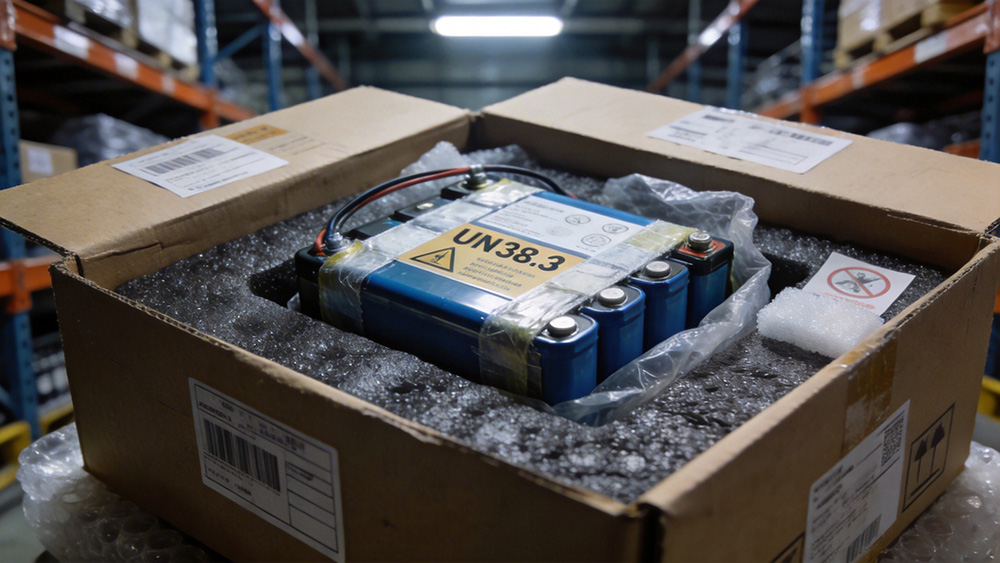
UN38.3 compliance is mandatory for all modes of transport: air, sea, rail, and road. Airlines, shipping lines, freight forwarders, and customs authorities all require valid UN38.3 test reports.
Related UN classification numbers:
- UN 3090 / UN 3480: Lithium batteries shipped outside equipment
- UN 3091 / UN 3481: Lithium batteries shipped inside or with equipment
Without UN38.3 certification, you cannot legally ship lithium batteries across borders.Non-compliance leads to:
- Seized or rejected shipments
- Administrative fines
- Legal liability
- Supply chain and launch delays
Risks of Transporting Lithium Batteries
Safety Hazards
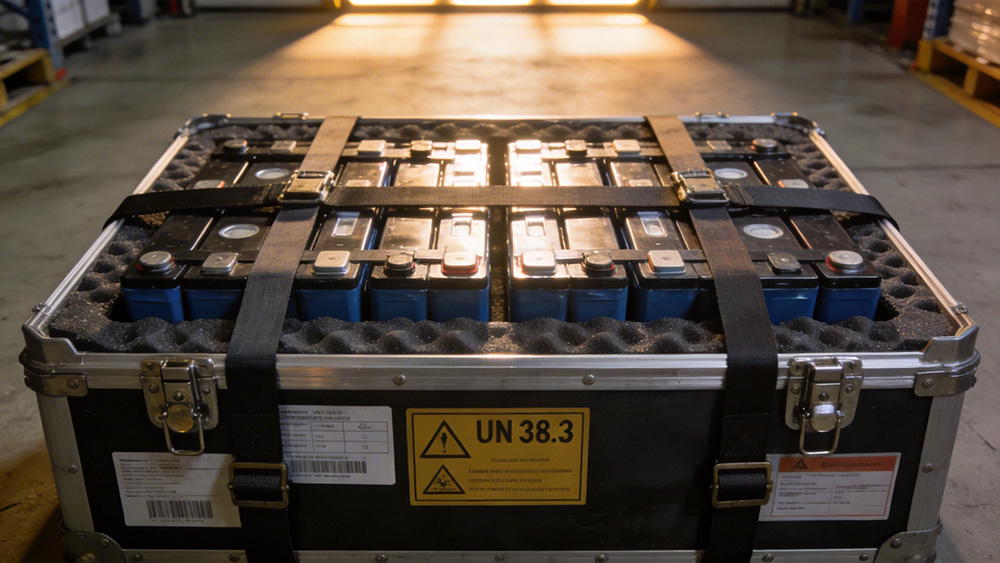
Lithium batteries store high energy density in compact form. If damaged or abused, they can experience thermal runaway—a self-sustaining reaction that produces extreme heat, flammable gases, fire, or explosion.
Major hazards include:
| Safety Hazard | Description |
| Thermal Runaway | Uncontrolled chain reaction causing fire or explosion |
| High Voltage Risks | Electric shock, sudden discharge, or circuit damage |
| Mechanical Damage | Cracks, deformation, or internal short from drops or crushing |
| Poor Packaging | Inadequate containment of heat or gas during failure |
| Chemical Hazards | Flammable electrolytes and toxic emissions |
| Environmental Stress | Extreme humidity or temperature accelerating failure |
Lithium battery fires release toxic gases such as hydrogen fluoride, which threaten human health and the environment. UN38.3 testing is designed to prevent these incidents before they occur.
Why UN38.3 Testing Matters
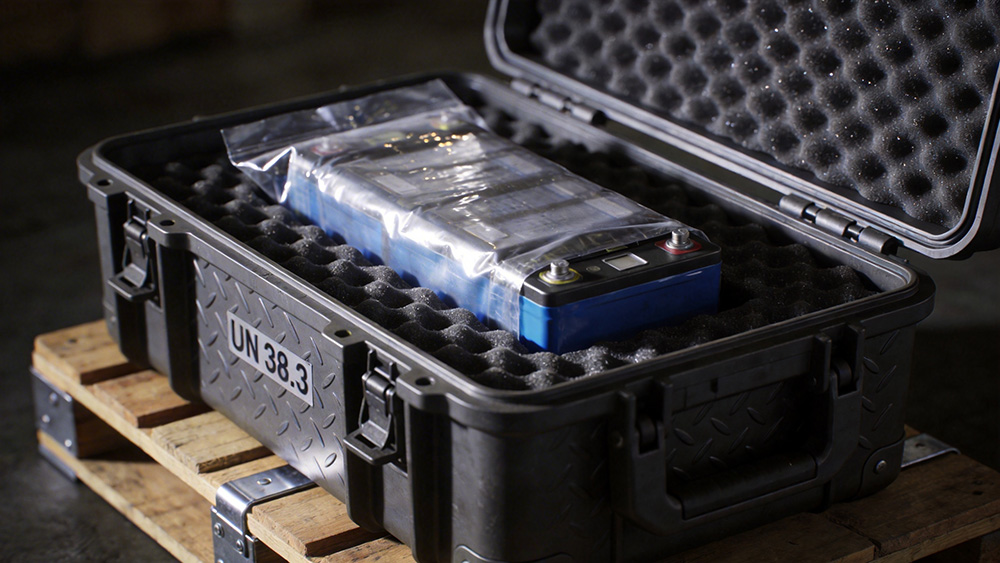
UN38.3 testing simulates the harsh conditions of transport to confirm batteries do not pose a danger. It verifies performance under low pressure, extreme temperatures, vibration, shock, and electrical abuse.
By passing these tests, manufacturers prove their batteries are:
- Safe for global transport
- Resistant to real-world shipping stress
- Compliant with international law
UN38.3 certification also builds customer and partner trust by demonstrating a commitment to safety and quality.
UN38.3 Testing Requirements
Full List of UN38.3 Tests
Each test has strict pass/fail criteria: no leakage, venting, disassembly, rupture, or fire allowed.
| Test Name | Description | Requirement |
| T.1 Altitude Simulation | Simulates high-altitude air transport | No leakage, rupture, or fire; voltage ≥90% original |
| T.2 Thermal Test | Tests performance in extreme hot & cold | No leakage, rupture, or fire; voltage ≥90% original |
| T.3 Vibration | Simulates vehicle/aircraft vibration | No damage; voltage ≥90% original |
| T.4 Shock | Tests sudden impacts during handling | No rupture, fire, or disassembly |
| T.5 External Short Circuit | Checks safety under direct short | No overheating, fire, or rupture |
| T.6 Impact & Crush | Simulates mechanical abuse | No fire or rupture |
| T.7 Overcharge | Tests safety under excessive charging | No explosion or fire (secondary batteries only) |
| T.8 Forced Discharge | Tests stability under forced discharge | No hazardous failure |
Test Applicability by Battery Shape
| Battery Type | Test | Application |
| Cylindrical | Impact Test | For cells over 18.0mm diameter |
| Prismatic | Crush Test | For prismatic, pouch, and small cylindrical cells |
| Pouch | Crush Test | For prismatic, pouch, and small cylindrical cells |
After passing all tests, a Test Summary Report (TSR) is issued. This document is required for all international battery shipments.
UN38.3 Compliance
Who Needs UN38.3 Certification?
UN38.3 is required for any organization involved with lithium batteries:
- Lithium battery and cell manufacturers
- Electronics brands integrating batteries (laptops, phones, drones, wearables, power tools)
- Importers and exporters
- E-commerce sellers shipping goods globally
- Freight forwarders, logistics, and shipping companies
All must provide valid UN38.3 documentation before shipment.
Consequences of Non-Compliance
| Consequence | Impact |
| Shipment Delays | Goods held, rejected, or returned |
| Regulatory Penalties | Fines and legal action |
| Transport Bans | Inability to ship by air or sea |
| Safety Incidents | Fires, explosions, environmental harm |
| Business Disruption | Delayed launches, lost sales, reputational damage |
Design Stage Considerations
The most effective way to ensure UN38.3 compliance is to design for safety from the start.
Best practices:
- Include UN38.3 requirements in initial product design
- Select materials and structures that pass vibration, shock, and thermal tests
- Conduct pre-testing before mass production
- Prepare labeling, packaging, and documentation early
As battery technology advances, standards are updated. Staying ahead reduces risk and keeps supply chains efficient.
FAQ
What is UN38.3 certification for batteries?
UN38.3 is the global safety standard that ensures lithium batteries are safe to transport by air, sea, rail, and road. It requires 8 standardized tests to prove batteries can withstand transport stress.
Why do batteries need UN38.3 testing?
UN38.3 testing prevents fires, explosions, and thermal runaway during shipping. It simulates real conditions like low pressure, vibration, temperature changes, and physical impact.
Who must comply with UN38.3?
Manufacturers, brands, importers, exporters, e-commerce sellers, and logistics companies that ship lithium batteries must all comply with UN38.3.
What happens if you ship without UN38.3?
Shipments may be detained, fined, or destroyed. You also face serious safety risks and legal liability.
How to prepare for UN38.3 compliance?
Design products with UN38.3 in mind, test early, use safe materials, and maintain updated documentation as standards evolve.