Home > LiFePO4 Battery > 48V LiFePO4 battery
48V LiFePO4 Lithium Battery Manufacturer
The 48V (51.2V) LiFePO4 battery is designed for medium to high-power equipment, where continuous output capability and system stability are critical.
Compared to lower voltage platforms, 48V systems require stricter control in cell consistency, thermal balance, and heat dissipation, ensuring reliable performance under long-term high-load operation.
LARGE provides customized 48V battery solutions for complex applications, delivering stable energy output and ensuring safe, reliable system operation.
Flexible design based on application requirements:
- Voltage platform: 48V / 51.2V systems
- Capacity: configurable based on energy consumption and runtime
- Discharge capability: supports continuous high-rate output
- Operating temperature: -20°C to 60°C (low-temperature options available)
- BMS functions: communication, charge/discharge control, and system protection
- Enclosure & protection: plastic or metal housing, up to IP65
- 24 years of industrial lithium battery customization experience
- Integrated development: cell selection, structure design, and BMS system
- Enhanced thermal management for high-power and harsh environments
- Full-process testing system covering safety and environmental validation
- Flexible manufacturing for multi-batch and fast delivery
- Global certifications (UL / CE / UN38.3 / MSDS, etc.)
Technical Specifications
| Nominal Voltage | 51.2V |
| Capacity Range | 10Ah – 200Ah |
| Charge Voltage | 58.4V |
| Discharge Cut-off | 40.0V – 44.8V |
| Series Configuration | 16S (LiFePO4) |
| Discharge Rate | 0.5C – 3C |
| Cycle Life | ≥2000 cycles (@80% DOD) |
| Operating Temperature | -20°C ~ 60°C (standard) -40°C ~ 55°C (low-temp optional) |
Note: Industrial-grade power system for continuous operation / stable output under heavy load conditions
Customizable for structure, capacity and BMS requirements.
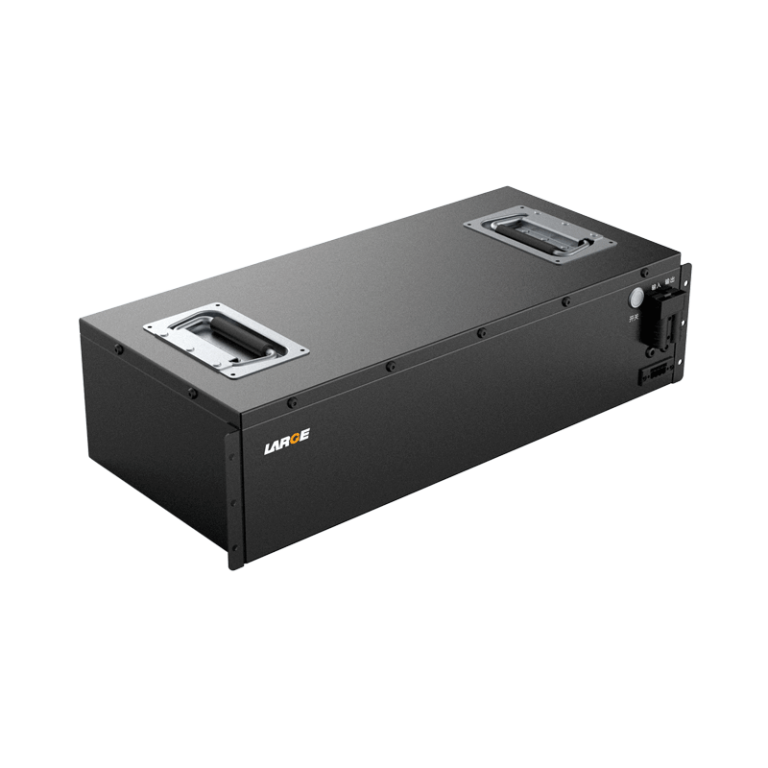
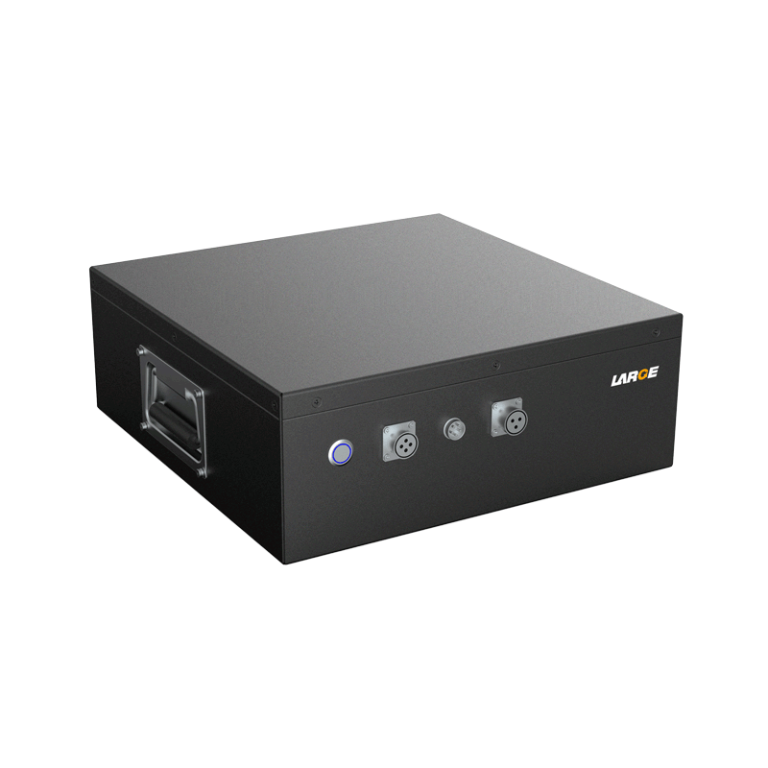
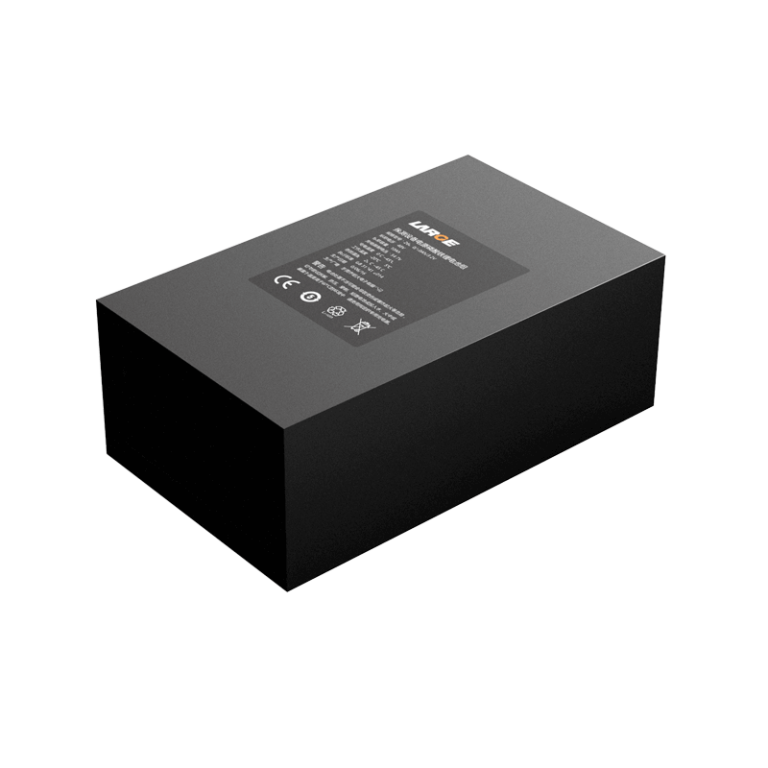
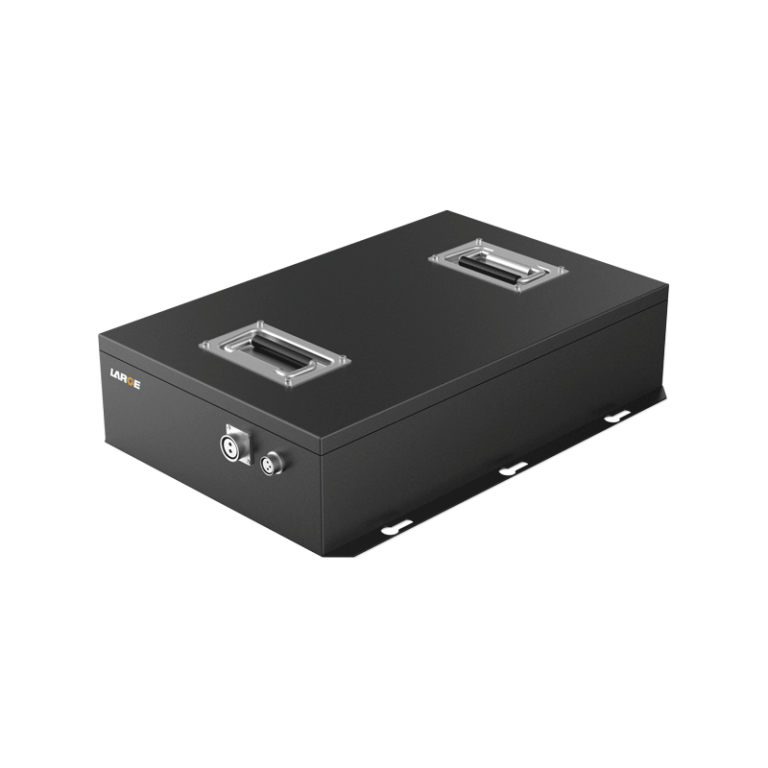
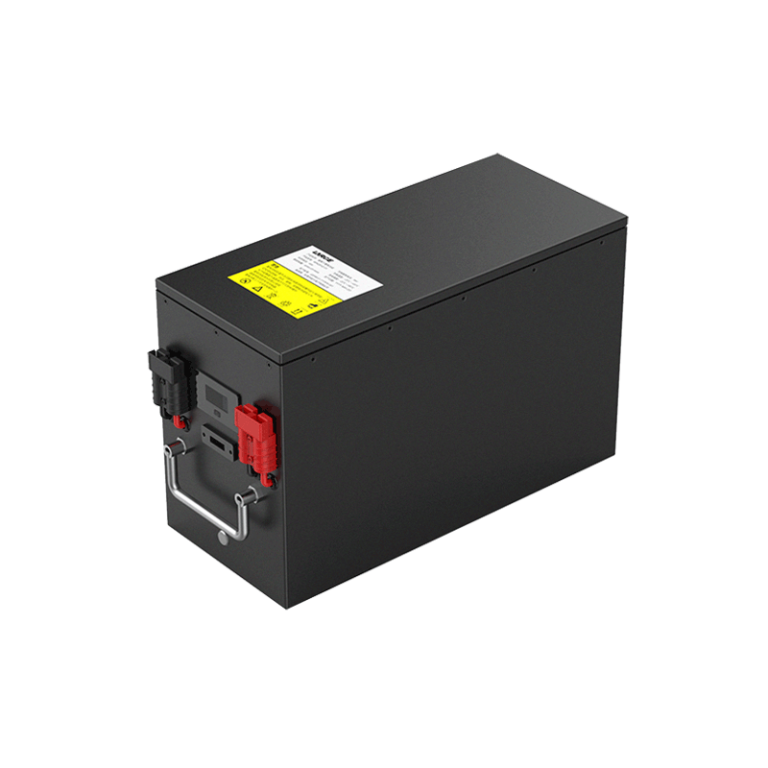
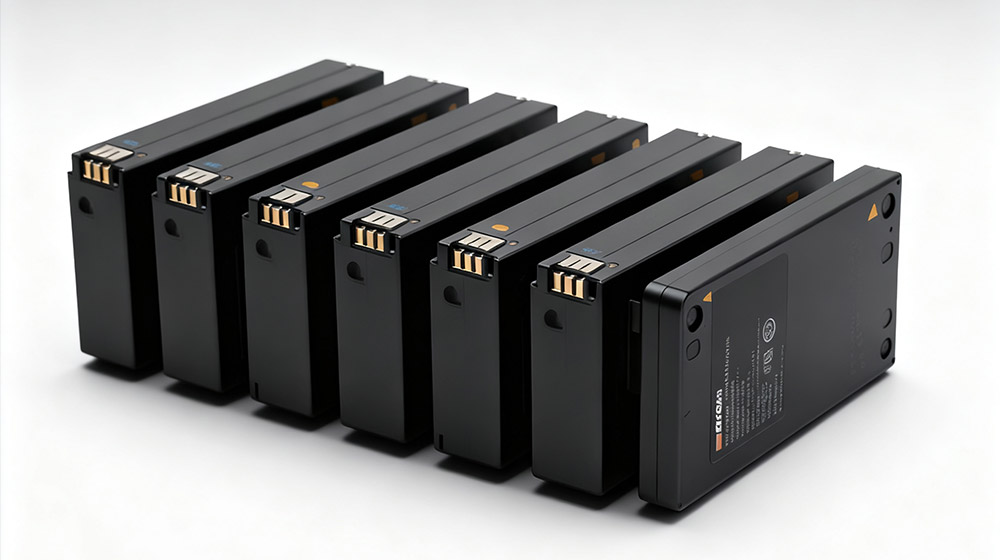
48V LiFePO4 Lithium Battery Pack
The following are reference cases. Solutions can be flexibly customized according to specific application scenarios.
48V LiFePO4 Lithium Battery Application Fields
Industrial Automation & Logistics Systems
AGV / AMR, material handling robots, stackers, towing vehicles, heavy-duty RGV
Designed for high-frequency operation with strong cycle life and system stability
Lawn & Outdoor Equipment
Outdoor machinery, aerial work platforms, light construction equipment
Designed for high-load operation and harsh outdoor environments
Industrial Cleaning Equipment
Ride-on and autonomous scrubbers, sweepers
Supports long continuous operation with stable motor drive performance
Railway & Industrial Inspection Equipment
Railway inspection systems, construction tools, field operation devices
Adapted to vibration, shock, and complex working conditions
Mining & High-Risk Equipment
Explosion-proof AGVs, mining transport equipment, oil exploration systems
Designed for extreme environments with high safety and reliability requirements
Low-Speed Industrial Vehicles
Shuttle vehicles, patrol cars, on-site transport vehicles
Focus on endurance, system matching, and long-term operational stability
Looking for a Battery Solution for Your Device?
48V LiFePO4 Lithium Battery Application Case Study
48V 13Ah Railway Drilling Machine Power System
Project Background
A railway engineering equipment manufacturer requires a reliable power system for track drilling machines operating in outdoor construction environments, with high demands on stability, low-temperature startup, and overall reliability.
Project Challenges
- Heavy lead-acid batteries reducing mobility and efficiency
- High inrush current during motor startup causing voltage drop
- Insufficient runtime for continuous operation
- Complex working conditions requiring stable power output
Solution
- Integrated system design (motor control + voltage regulation + charging management)
- Optimized high-rate discharge for motor startup surge
- Lightweight structure replacing lead-acid batteries
- Integrated BMS for real-time monitoring and protection
Results
- Weight reduced by ~40%–50%, improving mobility
- Stable motor startup with no power drop issues
- Runtime increased by ~30%–40% per charge
- Improved system stability and reduced maintenance frequency
Cell Balancing Technology in LiFePO4 Batteries
In 48V LiFePO4 systems, multiple cells in series can lead to voltage imbalance over time. Balancing technology ensures cell consistency and stable system output.
Passive vs Active Balancing
| Item | Passive Balancing | Active Balancing |
| Working Principle | Dissipates excess energy as heat | Transfers energy between cells |
| Energy Efficiency | Lossy | Higher efficiency |
| Balancing Speed | Lower | Higher |
| Application | Low-power systems | High-series / high-power systems |
| Long-Term Consistency | Moderate | Better |
Why Active Balancing is Important for 48V Systems
Voltage Difference Control Target
With active balancing, cell voltage difference can be controlled within:
±25mV
Safety Redundancy Design
48V systems adopt multi-layer protection mechanisms, including cell-level protection, module monitoring, and system-level fault control, ensuring overall safety and reliability.
Conclusion
For high-series and high-power applications, active balancing significantly improves system stability and consistency, making it a critical technology for 48V LiFePO4 battery systems.

Related Lithium Battery Voltages
48V LiFePO4 Lithium Battery FAQs
Can 48V LiFePO₄ batteries be customized?
Yes. 48V LiFePO₄ batteries can be customized in terms of capacity, size, discharge current, BMS functions, communication protocols (CAN/RS485/SMBus), and protection levels to match different industrial applications.
How many cells are in a 48V LiFePO₄ battery?
A standard 48V LiFePO₄ battery is usually 16 cells in series (16S).
Each LiFePO₄ cell has a nominal voltage of 3.2V, so 16 × 3.2V = 51.2V nominal system voltage.
How do you charge a 48V LiFePO₄ battery?
A 48V LiFePO₄ battery should be charged using a dedicated LiFePO₄ charger with a charging voltage of about 58.4V (for 16S systems). Always follow the BMS and charger specifications.
How to choose a 48V LiFePO₄ battery?
Choose based on:
·Required capacity (Ah / runtime)
·Load power and peak current
·Operating environment (temperature, vibration)
·Communication needs (if system monitoring is required)
·Size and installation constraints
48V LiFePO₄ vs 48V lead-acid battery, which is better?
LiFePO₄ is better in most cases:
·Longer cycle life (2000–4000 cycles vs 300–500)
·Lighter weight (up to 50% lighter)
·Higher usable capacity
·Faster charging
·More stable voltage output
·Lead-acid is cheaper but has shorter lifespan and lower efficiency.
Can I connect two 48V LiFePO₄ batteries in parallel?
No, 48V LiFePO₄batteries should not be connected in parallel directly unless they are fully matched in voltage, capacity, and BMS specifications. Improper connection may damage the battery system.
What temperature range is safe for a 48V LiFePO₄ battery?
Typical safe range:
Discharge: -20°C to 60°C
Charge: 0°C to 45°C (low-temperature charging requires special BMS or heating system)
Does a 48V LiFePO₄ battery need a BMS?
Yes. A BMS is essential to protect the battery from overcharge, over-discharge, overcurrent, and temperature issues, and to balance cells for longer lifespan and safety.
How to extend the lifespan of a 48V LiFePO₄ battery?
·Avoid deep discharge
·Use proper LiFePO₄ charger
·Operate within recommended temperature range
·Avoid long-term full charge storage
·Ensure proper BMS protection is active